India now has 56 policy schools and universities offering public policy programmes, according to The Hindu. That boom answers one question: can the country train policy professionals at scale? The answer is yes. The unanswered question is sharper. Are these schools teaching students how to decide, not just how to describe?
The argument, laid out by an associate professor who directs the Case Study and Research Centre at the Indian School of Public Policy in The Hindu, is that the next task is not expansion. It is rethinking how policy is taught. Most Indian policy classrooms still lean on Western examples, which means graduates arrive at Indian desks having studied decisions made under other federal systems, other constraints, and other stakes.
Why does the case method matter for policy training?
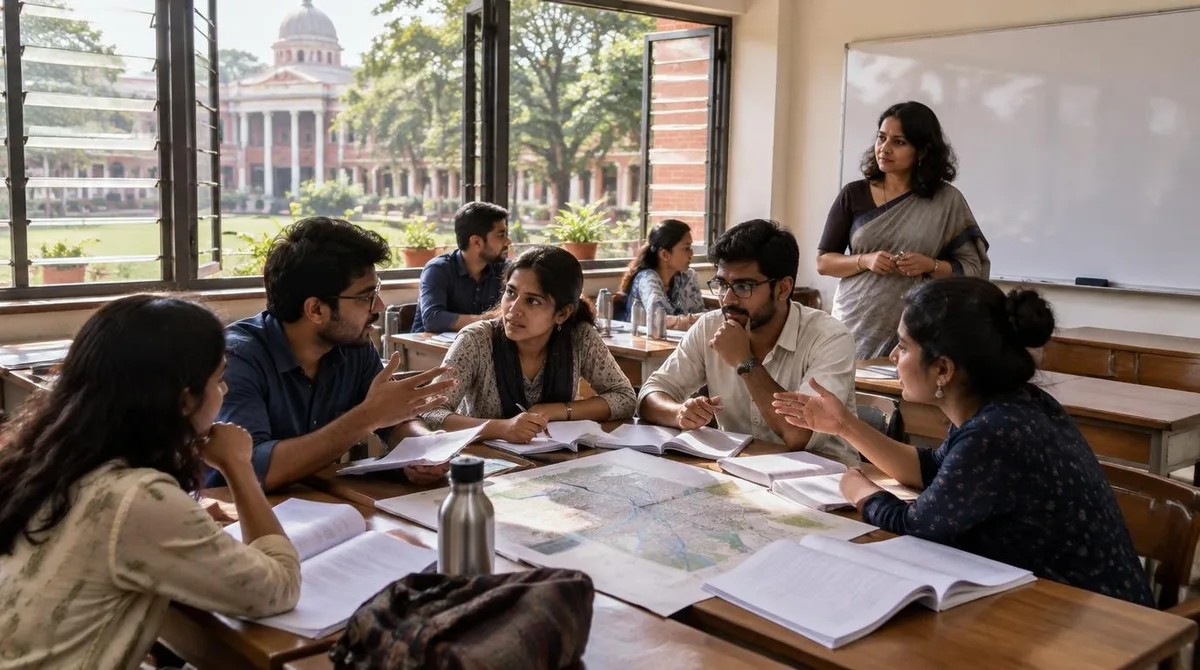
The case method puts students inside a real decision that has no clean answer. They read what the officials knew at the time, then argue about what to do. The point is that the classroom provides no definitive answer. Students have to weigh trade-offs between efficiency, equity, and competing legitimate claims, which is exactly the work policy professionals do.
The writer's framing draws on a long-standing distinction in professional education. Conventional lecture-driven training builds what one tradition calls technical rationality: applying settled propositions to well-defined problems. But public policy work is often messy, unique, and value-laden. Scholars Rittel and Webber called these "wicked problems" back in 1973. Deciding under time pressure, incomplete information, and institutional constraints is a performance skill. It is built through repeated, guided practice, not by absorbing conclusions other people reached.
That is the same logic behind how accountability is learned and enforced elsewhere. Reading the accountability ladder: a framework explained shows how judgment about who answers for what has to be practised, not memorised. Policy schools face the same gap between knowing a rule and using it.
What is missing from Indian policy classrooms?
The missing ingredient is home-grown teaching cases. Most Indian policy classrooms continue to rely on Western examples, per the article's citation of CPPR from 2026, instead of exposing students to the multi-level governance of India's federal structure. A student who has never worked through a decision that runs across national, state, and local layers has not rehearsed the job India will actually hand them.
Because genuine Indian cases are scarce, institutions compensate in other ways. They use practitioner-taught courses, fieldwork placements, and internships, as Phadnis et al. documented in 2025. These are valuable substitutes. The article's point is that they are not a replacement for a deep bench of rigorously written cases grounded in Indian institutions. An internship teaches one organisation's reality. A well-built case library lets a student rehearse dozens of decisions before the stakes are real.
How would India build a case ecosystem?
The prescription is institutional, not inspirational. Building the ecosystem requires deliberate investment in dedicated case-writing centres. It requires partnerships with serving or retired civil servants, who supply raw material and vet realism. Faculty members need time and incentives to write cases, and institutions should count case writing as scholarship, with dedicated funding, research assistance, and credit alongside traditional publications. A shared repository would let schools pool and reuse indigenous material instead of every institution starting from zero.
That last point deserves attention from anyone who follows government programmes. A shared, vetted repository of real Indian governance decisions would also give journalists, auditors, and oversight bodies a common factual record to argue from. Coverage of Government accountability offices: the watchdogs explained makes a related point: oversight works best when the underlying record is solid and shared.
What does this mean for the quality of governance?
The stakes are practical. The article argues that graduates trained only to understand governance will not be prepared to lead it. Policy professionals who have never rehearsed a hard trade-off face their first one in real time, where mistakes can have lasting consequences. The classroom is the cheap place to fail. The field is not.
There is room for competing views here. Practitioner-taught courses and internships are not nothing; many students learn more from a placement than from any seminar. The counter-argument in the article is about scale and consistency. Substitutes depend on which practitioners a school can attract and which placements it can arrange. A case library is a durable, shared asset that every cohort can use.
The honest reading of the evidence is that India's public policy schools have done the hard political work of existing at scale. The remaining task, as the writer puts it, is epistemic: teaching judgment through disciplined, sustained engagement with real Indian decisions and trade-offs. Whether the 56 schools invest in that, and how quickly, will shape what the next generation of Indian officials does when the trade-off lands on their desk.