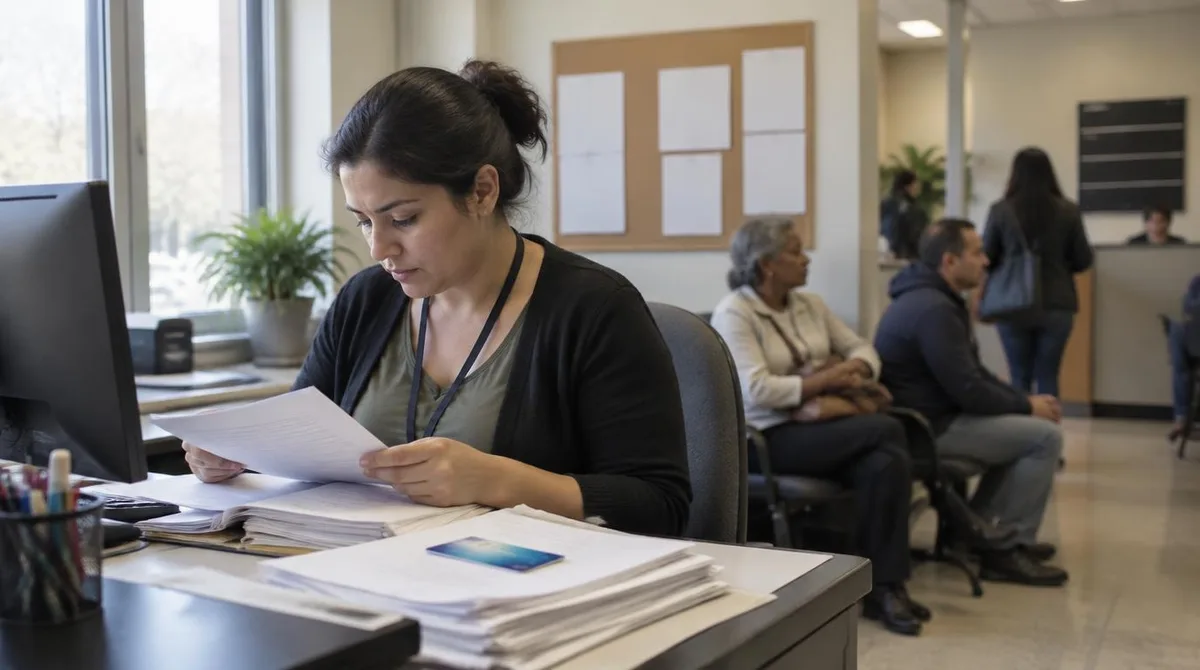
Are SNAP benefits back? There is no single national answer, because SNAP is a federal program administered state by state. Each state agency issues benefits on its own schedule to its own Electronic Benefits Transfer (EBT) cards. So the reliable way to answer the question is to check with the agency that handles your case, not with a national headline.
What is verifiable is the structure of the program itself. SNAP, formerly the Food Stamp Program, provides nutritional support to low-income seniors, people with disabilities on fixed incomes, and other households with low incomes. Eligibility rules and benefit levels are set mostly at the federal level, but states have flexibility to tailor parts of the program and run their own issuance systems.
This article explains how benefits normally reach you, what to do if a payment has not arrived, and why your state agency — not a national source — is the place to get your own answer. Rules and processing practices vary by state and can change, so treat anything time-sensitive as something to confirm directly.
How SNAP payments normally reach you
Once a household is approved, the state agency loads benefits onto a re-loadable EBT card, which works like a debit card at approved grocers. Florida's Department of Children and Families explains on its Supplemental Nutrition Assistance Program (SNAP) page that the card is mailed to the mailing address on file after approval. That detail matters: a delayed payment and a delayed card can look identical from the kitchen table.
Benefits can be used to buy breads, cereals, fruits, vegetables, meats, fish, poultry, dairy, and plants or seeds to grow food. They cannot be used for nonfood items such as pet food, soap, paper products, alcohol, tobacco, vitamins, medicines, or hot foods prepared in the store.
Many states also stagger issuance across the month, which means a household's deposit date depends on its case, not on a statewide calendar. If neighbors report payments arriving on different days, both can be correct.
What to do if your benefits have not arrived
If a payment you expected has not shown up, the practical steps are the same regardless of the cause. The goal is to move the question from general worry to a specific case inquiry with the agency that owns your file.
- Check your balance and transaction history first. Log into your state's online portal or call the number on the back of your EBT card. Confirm whether the deposit posted, and when.
- Confirm your mailing address. If you were recently approved and the card never arrived, it may have gone to an old address. Florida's SNAP page notes the card is mailed to the address on file, and states generally require you to keep that information current.
- Contact your state agency directly. In Florida, for example, applicants and recipients can use the MyACCESS portal online, visit a Family Resource Center or community partner, or call the Customer Contact Center at 850-300-4323. Every state has an equivalent channel.
- Ask specifically about your case status. Say whether you are waiting on an approval, a card, or a monthly deposit. These are different problems with different fixes.
- Document what you are told. Note the date, the representative's guidance, and any reference number. If the issue recurs, that record helps.
Keep your PIN private throughout. Florida's guidance on online purchasing notes that using an EBT card, including online, always requires your personal identification number, and that cardholders should protect it.
Why the state agency is the source of truth
SNAP is federally funded and federally rule-bound, but the day-to-day machinery — applications, eligibility determinations, issuance, and card support — sits with state agencies. Florida's Department of Children and Families, for instance, describes its Office of Economic Self-Sufficiency as responsible for determining eligibility using federal guidelines. That division of labor is why a disruption or delay in one state tells you little about another.
It also means the answer to "are snap benefits back" in your case lives in one place: your caseworker's system. State agency pages and hotlines carry the current status for their own recipients. National coverage can explain the program, but it cannot see your account.
The same state-by-state pattern shows up elsewhere in public benefits. How Medicaid enrollment works, and why processing times vary by state covers an identical structure in health coverage: federal rules, state administration, and timelines that differ depending on where you live.
What this means for recipients
The practical takeaway is to treat SNAP status as a case-level question. A payment that has not arrived has a small number of ordinary explanations — a deposit scheduled later in the month, a card lost in the mail, an address on file that is out of date, or a pending recertification. Each is resolved through the state agency, and none is resolved by waiting indefinitely.
Recipients should also be alert to scams that surface whenever benefit questions are in the air. No legitimate agency needs your PIN to check a balance or restore a payment. If someone asks for it, that is a warning sign, not a service.
If you need a refresher on the underlying program, how SNAP food benefits work, and who qualifies as of 2026 explains eligibility and benefit mechanics, and who qualifies for SNAP, and how to apply in 2026 walks through the application itself. Households with young children may also want to review how WIC works, and who qualifies for the nutrition program, which is a separate nutrition program with its own rules.
Our analysis: what is known and what is not
What is known is durable: SNAP operates through state agencies, benefits load onto EBT cards on schedules that vary by case and by state, and the official channel for a missing payment is the agency that manages your case. What is not known, from the available documentation, is any current, nationwide statement about delayed issuance — no single federal page speaks for all states at once, and we will not generalize past the evidence.
That restraint is deliberate. Readers making grocery decisions this week need accurate, case-specific information, and the only source that has it is the state agency. If your state has announced changes to issuance, its own website or hotline will say so directly.
SocialGov is an independent publication, not a government agency or portal. We cannot check individual cases or process applications; for answers about your own benefits, use your state SNAP agency's portal or hotline.
Where to get your own answer
Start with the EBT customer service number on the back of your card, then your state agency's online portal. If you applied recently and have heard nothing, ask the agency directly about your application status rather than assuming a denial or a delay. Keep records of every contact. And if a state-level change affects you, the notification will come from the agency — Florida, for example, states that updates and other important information will be shared with all SNAP benefit recipients as soon as it is available.