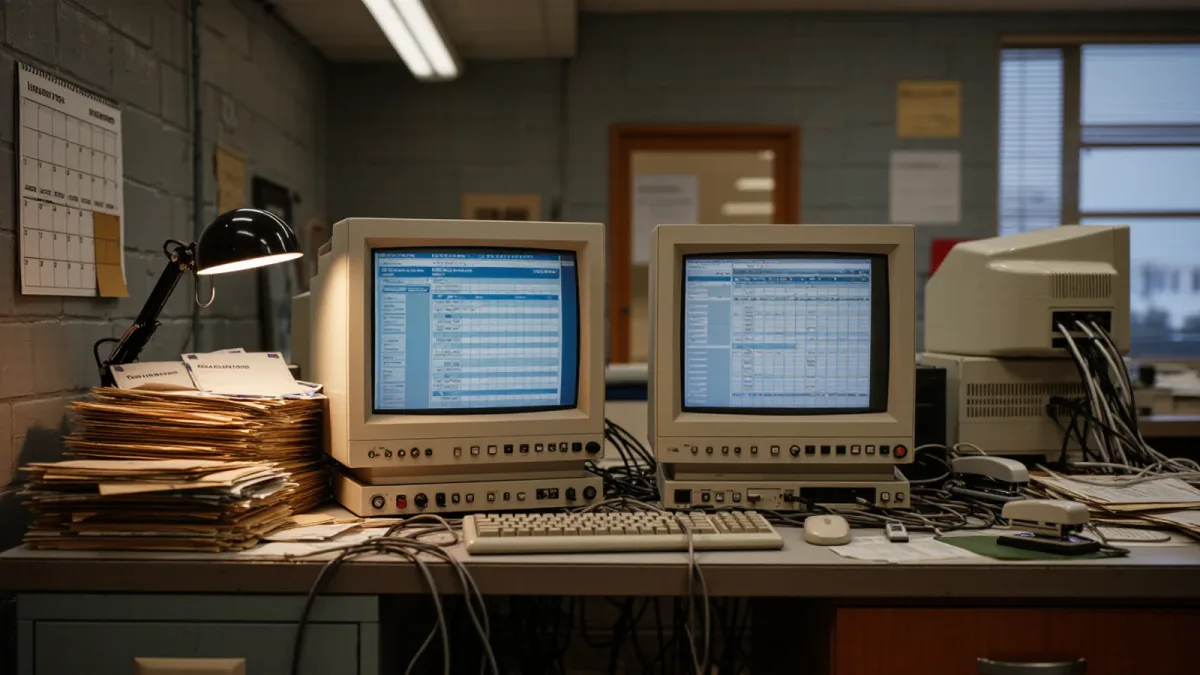
Voter registration lists are databases, and like any database they drift: voters move, die, change names, get convicted of disqualifying crimes, or register twice in different states. States are required by the National Voter Registration Act of 1993 (NVRA) to keep the rolls accurate and current, using a defined list-maintenance program. As of 2025, all states maintain statewide electronic registration databases, a standard completed under the Help America Vote Act of 2002.
What federal law requires — and forbids?
The NVRA, passed in 1993, sets two rules that shape everything else. First, states must conduct a general program that makes a reasonable effort to remove registrants who have become ineligible — moved, deceased, or disqualified — from the rolls. Second, the law explicitly forbids removing anyone because of a failure to vote. That protection, in Section 8 of the act, is the reason a voter who has skipped several elections cannot be dropped for inactivity alone; some inactivity-triggered removals are legal, but only when combined with other evidence, such as returned mail and a second election cycle, and only with notice. The Help America Vote Act added coordination with state driver's license and social service agency records, which is why address changes at the DMV often flow into the voter file.
What triggers a removal from the rolls?
Removals fall into a few defined categories, each with its own evidentiary bar:
- Death, matched against state vital records and, in most states, the Social Security Administration's death master file
- Confirmed move out of the jurisdiction, confirmed through returned mail and the NVRA's two-general-election waiting process, or through interstate data matches
- Felony conviction or mental-capacity adjudication, where state law makes it disqualifying, matched against court and corrections records
- Duplicate registrations within the state, resolved to keep one record
Before most removals, the voter gets a forwardable notice card. If it is not returned and the voter does not respond or update, the record is moved to an inactive status first — and an inactive voter who shows up to vote can still cast a regular ballot after confirming the address. Ineligible status and actual deletion are different stages.
Who checks the checkers?
List maintenance is unusually well-watched. The Department of Justice's Civil Rights Division can sue states over NVRA violations, and has in both directions — over removals that were too aggressive and over rolls that were not maintained at all. Private plaintiffs can sue too: the NVRA includes a private right of action, which is how advocacy groups on both sides force compliance. Voting rights organizations challenge purges that ensnare eligible voters, while election-integrity groups sue states that fail to remove ineligible records. On top of the legal checks, states publish list-maintenance statistics to the federal Election Assistance Commission biennially, and academic researchers audit the match procedures themselves.
What do interstate data-sharing programs do?
Because people move between states, several cooperative programs compare registration data across state lines. The Electronic Registration Information Center (ERIC) — whose members have included more than half the states since it was founded in 2012 — uses postal change-of-address data, death records, and DMV files to flag likely movers and duplicates for member states to process under their own laws. Some states that left ERIC operate their own cross-state comparisons instead. The programs do not remove anyone directly; they produce lists of suspects that state and county officials must investigate and act on individually, and the accuracy of the underlying matches is a standing subject of study.
What should you do as a voter?
Check your own record at least once a year and before every election, through your secretary of state's registration lookup — most take thirty seconds by name and date of birth. If your record shows a wrong address or an inactive status, update it online in the many states that allow it, or submit a new registration, which fixes the old record. If you receive an address-confirmation card in the mail, respond to it: it is the step that prevents an involuntary move to inactive status. And if you find you have been removed in error, re-registering is the remedy in nearly every state, and it works up to your state's registration deadline.
How does the DMV connection work?
The motor vehicle agency is the largest single pipeline into the voter file. The NVRA's so-called motor voter provisions require states to offer registration when you apply for or renew a driver's license, and the Help America Vote Act requires the registration database to connect to the DMV's records — which is how states verify your identity and license number and how an address change at the DMV surfaces an update to your registration. The connection cuts both ways: because the systems share data, a license update in one state can flag a duplicate registration in another, and that flag is a common trigger for the interstate matching described above.
What happens if two states both have you registered?
It is more common than most voters realize, usually because a move left the old registration in place. Cross-state matching programs flag the duplicate to both states. What happens next depends on state law and your behavior: registering in your new state generally starts the process of removing the old record, and voting twice in the same federal election is a crime in both. If you moved and never re-registered, the old state will eventually inactivate or remove the record through its normal maintenance; you can also write to the old election office and ask for the cancellation yourself, which is the cleanest fix.