A mobile driver's license (mDL) is the digital version of your plastic license, issued by your state motor vehicle agency and stored in a phone app or wallet with cryptography that lets anyone verify it is genuine without calling the state. The credential follows the ISO/IEC 18013-5 standard, published in 2021, which defines both the data format and the wireless handoff. As of early 2026, roughly 20 states plus Puerto Rico issue mDLs, and the Transportation Security Administration accepts them at participating airport checkpoints in dozens of airports.
How is an mDL different from a photo of your license?
A photo proves nothing — it is copyable and unverifiable. An mDL is a signed document: the state motor vehicle agency cryptographically signs the data, and a verifier's device checks that signature against the state's public key. The phone proves the credential belongs to you through a face match or fingerprint before presenting it. And the presentation is selective: the standard supports sharing a single fact — that you are over 21, for example — without revealing your birth date, address, or anything else. That selective disclosure is the technical feature no photo can match, and it is the reason bars, airports, and lenders are interested.
What actually happens when you tap your phone?
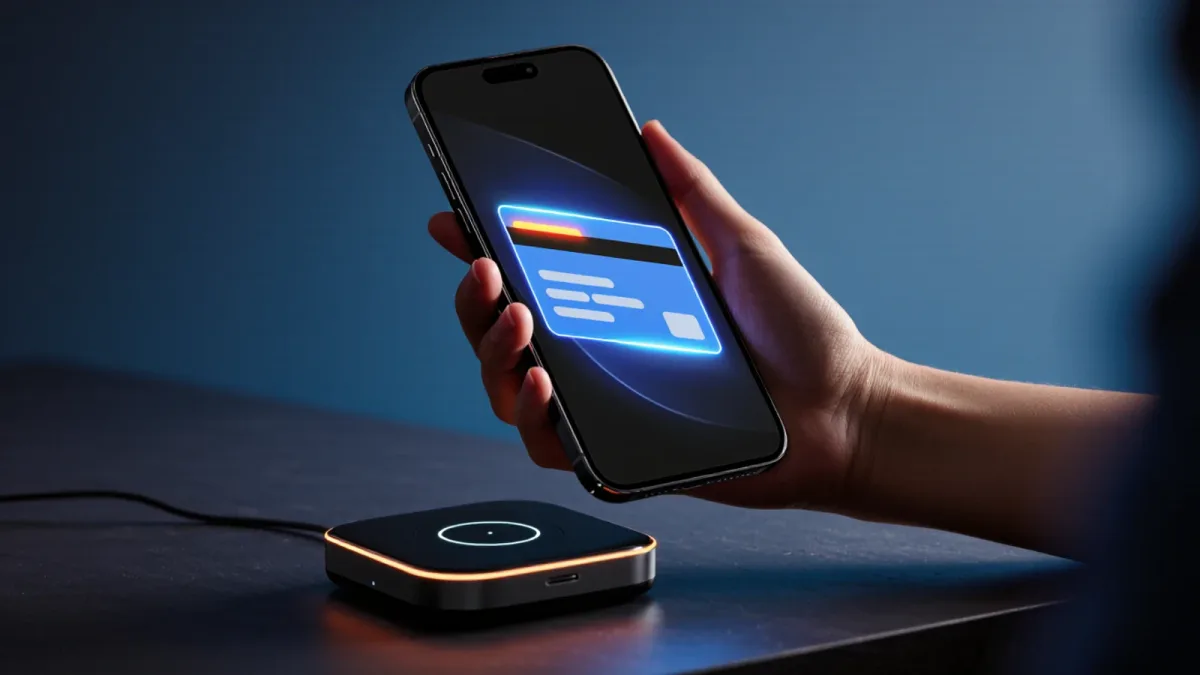
ISO 18013-5 defines the in-person exchange. Your phone and the verifier's reader connect over NFC or Bluetooth, or through a QR code. Before any data moves, the two devices authenticate each other, so a fake reader cannot phish your credential and a fake phone cannot fool the reader. Your phone then transmits only the data elements you agreed to share, signed and encrypted. The standard also supports an offline mode, so a verifier with no internet connection can still confirm a credential's signatures. A companion standard, ISO/IEC 18013-7, extends the same idea to online verification, letting a website or app request your credential over the internet.
Which states issue one, and where can you use it?
Adoption is uneven and worth checking before you rely on it. States issuing mDLs as of early 2026 include Arizona, California, Colorado, Georgia, Maryland, and Utah, among roughly twenty in total; some offer the credential inside Apple Wallet or Google Wallet, while others use their own state app, such as California's DMV Wallet. On the acceptance side, TSA's digital ID program accepts mDLs from participating states at a growing list of airport checkpoints — but only where readers are installed, so a physical backup remains necessary. Fewer retailers and police agencies have readers than states have issuers, which makes the mDL today an addition to the plastic card, not a replacement.
| Feature | Physical license | Mobile license (mDL) |
|---|---|---|
| Verification | Human reads it; hard to authenticate quickly | Cryptographic signature checked by a reader |
| Data shared | Everything printed on the card | Only the data elements you consent to share |
| Works offline | Yes | Yes, under the ISO 18013-5 offline flow |
| Theft risk | Card can be lost or copied | Locked to the device by biometrics |
| Acceptance in 2026 | Universal | Airports in participating states and a limited set of verifiers |
What about privacy — who is tracking you?
The standard was built with the tracking question in mind. The phone-to-reader exchange is direct: in the offline flow, no state server sits in the middle of a bar's age check, and the state does not learn when or where you present the credential. Periodic refresh of the credential does contact the issuing agency, so the issuer knows the credential is alive, but routine presentations are not logged centrally. What remains unresolved is verifier behavior outside the standard — a business that demands more data than needed, or captures it, is a policy problem the technology does not fix, and several states' enabling laws limit what verifiers may retain.
How do you get one?
Through your state motor vehicle agency, if it offers an mDL. The enrollment flow is similar across states: verify you hold a valid physical license, then complete an in-app identity check, usually a selfie matched against the photo on file with the agency, and in some states a re-verification of documents. Enrollment is generally voluntary and costs nothing or a small fee depending on the state. Your plastic license stays valid, and you should keep carrying it until verifiers you actually encounter — including TSA checkpoints you use — accept the digital version.
What is the relationship between mDLs and REAL ID?
They solve different problems and now overlap at the airport. REAL ID is a federal standard for the documents behind a physical license — proof of identity and residency — required for boarding commercial flights from participating checkpoints. An mDL is a delivery format: the digital credential carries the same underlying license, and TSA's program accepts mDLs from participating states as an alternative to presenting the plastic card at its digital-ID checkpoints. If your physical license is REAL ID compliant, the digital version issued from it serves the same purpose where readers exist; the digital ID does not, by itself, change whether your underlying license meets REAL ID rules.
Do police accept an mDL during a traffic stop?
It depends on the state, and the answer is changing faster than any fixed list can track. Several states that issue mDLs have amended their vehicle codes so the digital credential satisfies the duty to present a license on demand, while officers in many jurisdictions still ask for the physical card because patrol vehicles lack readers. Until acceptance is universal in your state, the safe move during any official contact is to offer the physical license first and mention the digital one as a supplement.