Election results become official only after every county tallies its votes, reconciles the totals against voter records, and a state board certifies the statewide count. In a typical presidential year, that state certification lands in late November or early December — roughly 30 days after Election Day, which falls in early November. As of the 2024 cycle, the Electoral Count Reform Act of 2022 sets the federal deadlines that follow.
What happens before certification?
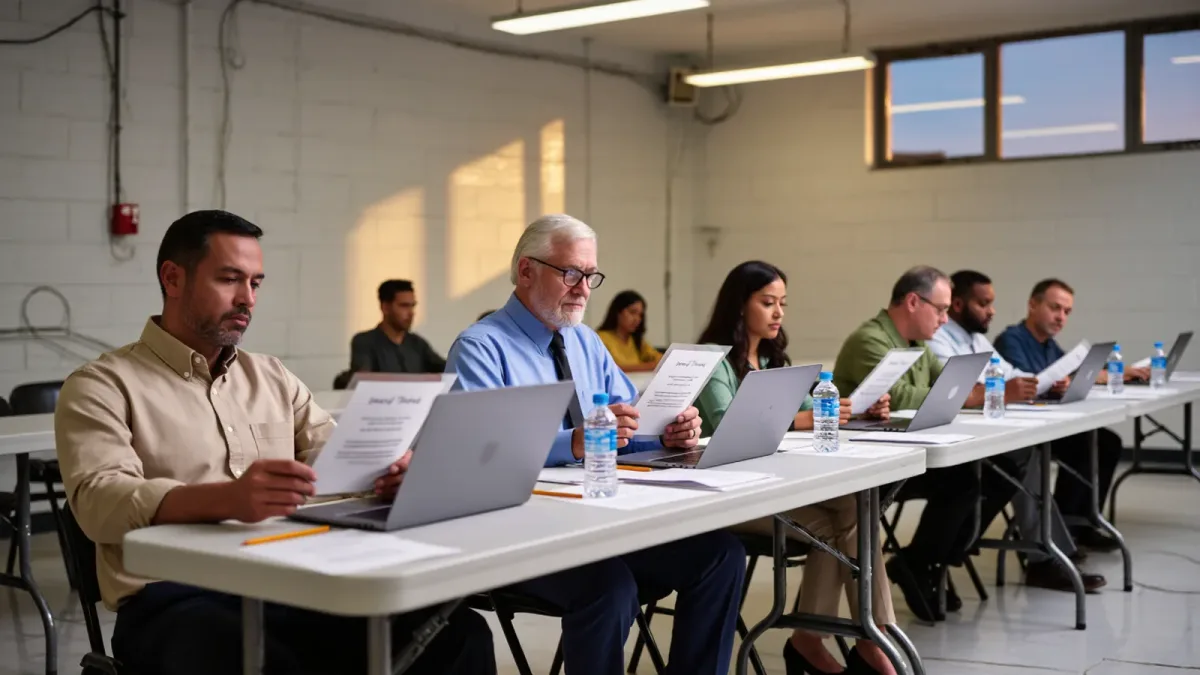
Certification is the last step of the canvass — the official audit-trail process of counting and verifying every ballot. Before a county can canvass, election officials process ballots through a chain of public steps:
- Counting early and mail ballots, which in many states begins days before Election Day
- Verifying provisional ballots cast by voters whose eligibility had to be checked
- Resolving signature-cure deadlines for mail ballots flagged in verification
- Conducting post-election audits, required in most states, which hand-count a sample of ballots to confirm the machines counted correctly
None of these steps are new, and most are governed by state law with fixed deadlines. The noise on election night is a projection; the canvass is the accounting.
What does a county canvass actually do?
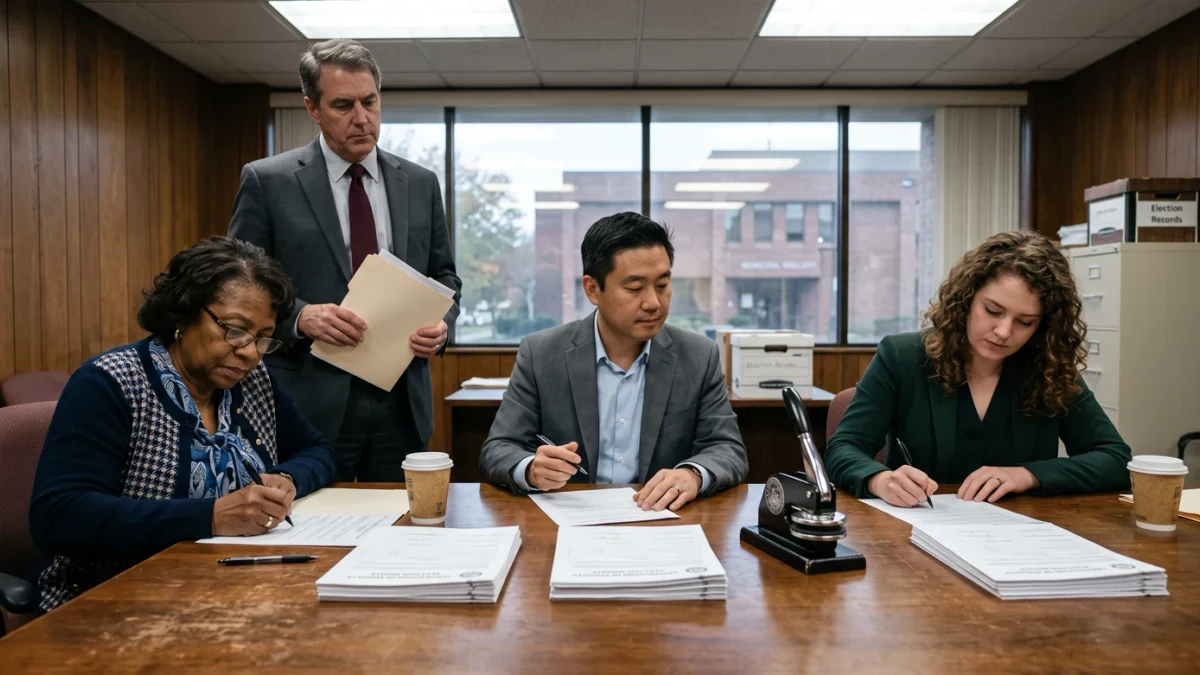
In most states, an elected or appointed county body — often called a canvassing board or board of canvassers — meets in public, usually one to two weeks after Election Day. Its job is narrow: confirm the vote totals reported by precincts and machines match the paper records, and formally adopt the county's results. Members typically include the county clerk or election director, a judge, and representatives of the major parties. If discrepancies surface, the board can order a recount or reconcile the tally before it signs the canvass document. That signed document is what moves the count up to the state level.
Who certifies results at the state level?
A state canvassing authority — in most states a board that includes the governor, secretary of state, and other statewide officials — meets on a date set in state law to certify statewide and federal results. Most state deadlines fall between mid-November and early December. In the 2024 cycle, for example, most battleground states certified presidential results by early December, within about a month of Election Day. Candidates can generally request recounts or contest results under state law during this window; some states pause certification for pending recounts, but courts have repeatedly held that officials must complete mandatory certification deadlines.
What happens after a presidential election?
Presidential results follow an extra federal track. After state certification, the governor of each state prepares a certificate of ascertainment — the official document listing the winning slate of electors — and sends copies to the Archivist of the United States at the National Archives. Electors then meet in their state capitals on the first Tuesday after the second Wednesday in December (December 17 in 2024; December 15 in 2026) to cast their votes. States send those electoral votes to Congress and the Archivist, and a newly seated Congress counts them in a joint session on January 6. The Federal Election Commission has no role in this process; it regulates campaign finance, not election administration.
What did the Electoral Count Reform Act change?
Congress passed the Electoral Count Reform Act as part of the 2023 omnibus spending law after the disputed attempts to overturn the 2020 results. The law clarified that each governor's certificate of ascertainment is conclusive unless a court orders otherwise, tightened the timeline for state court election disputes so litigation resolves before electors vote, and raised the threshold for members of Congress to object to a state's electoral votes from one member of each chamber to one-fifth of each chamber. It also confirmed the vice president's role in the joint session is ministerial — limited to counting, not deciding.
How close do results have to be for a recount?
Every state sets its own margin. Many states order an automatic recount when the margin falls below one-half of 1 percent, and some trigger one below 0.25 percent; in other states a candidate must petition and often pay. Recounts happen during the canvass-and-certification window, which is why a statewide recount can finish in a few weeks. The 2000 Florida recount, which ended with a 537-vote margin after a Supreme Court ruling, remains the extreme case; the 2024 Senate recount in Pennsylvania and other close races since have concluded on the normal calendar.
What should a voter watch for?
If you want to follow the process rather than the projections, three checkpoints tell you when results are real:
- Your county election office's canvass meeting date, usually posted on its website with an agenda
- Your secretary of state's certification schedule, which most states publish in advance and webcast
- The National Archives' Electoral College page, which posts certificates of ascertainment and votes as they arrive
Everything before certification is a count in progress. Everything after it is history, recorded on paper, with signatures.
Where can you see certification documents yourself?
More than people expect is public. County canvass minutes and certifications are public records, usually posted to the county election office site or available on request under state records law. State certification is typically announced with the certified results file itself, and several secretaries of state post the signed canvass document as a PDF. For presidential elections, the National Archives posts each state's certificate of ascertainment and certificate of vote as they arrive, usually within days of receipt. Reading these documents is the fastest way to separate the official record from the commentary around it: the certificates are one page, signed, and dated, and they are the same documents Congress used to count the vote.