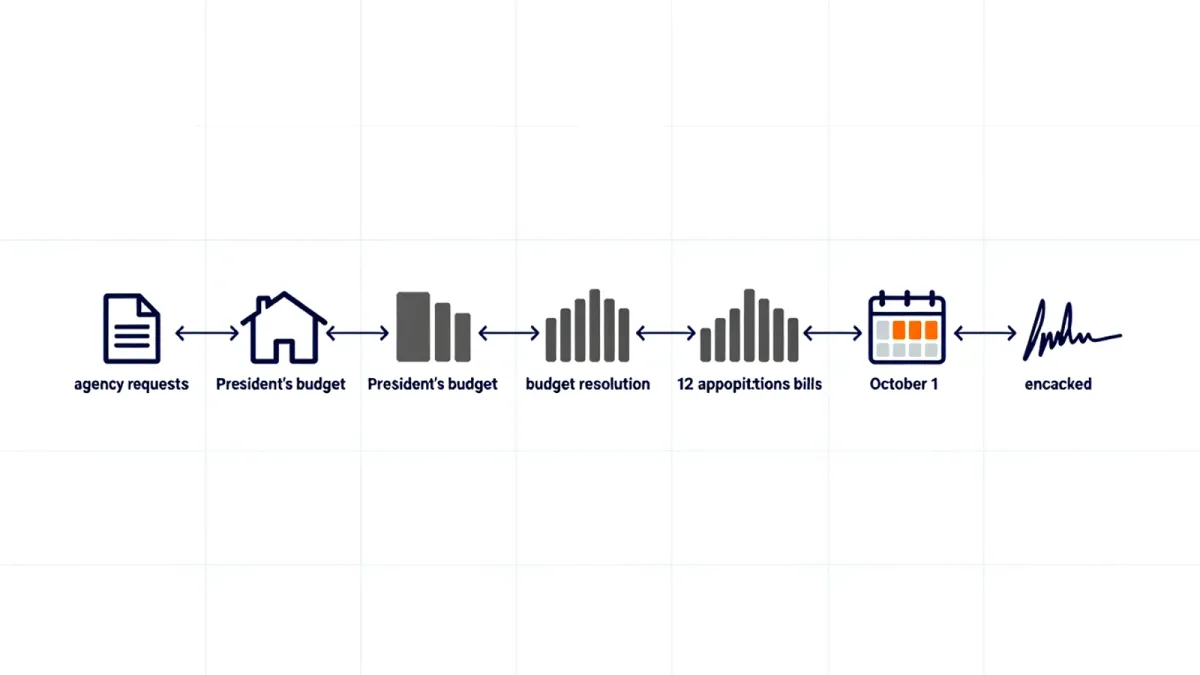
A government shutdown happens when Congress misses the October 1 deadline for annual spending bills and passes no continuing resolution. Agencies must then stop activities not excepted by law, furloughing civilian employees and pausing services that depend on annual appropriations. What continues surprises many people: mandatory programs like Social Security and Medicare keep paying benefits, the Postal Service keeps delivering mail because it funds itself, and benefit checks never depend on the annual bills. The scale varies by shutdown, but the 2018-2019 lapse — the longest on record at 35 days — put roughly 800,000 federal employees in furlough or unpaid-work status and delayed billions in federal activity.
Why does a funding lapse force a shutdown at all?
The Antideficiency Act, a law dating to the 19th century and tightened in the 1880s, makes it a crime for a federal employee to obligate money that Congress has not appropriated. Agencies cannot legally spend, sign contracts, or order supplies once their annual funding runs out. The Department of Justice's Office of Legal Counsel has interpreted the law to require an orderly suspension of activities whose funding has lapsed — meaning agencies cannot keep operating on the assumption that Congress will pay later. Only activities excepted under the law, such as those protecting human life or property, may continue, and their employees must work without pay until funding returns.
What gets shut down during a lapse?
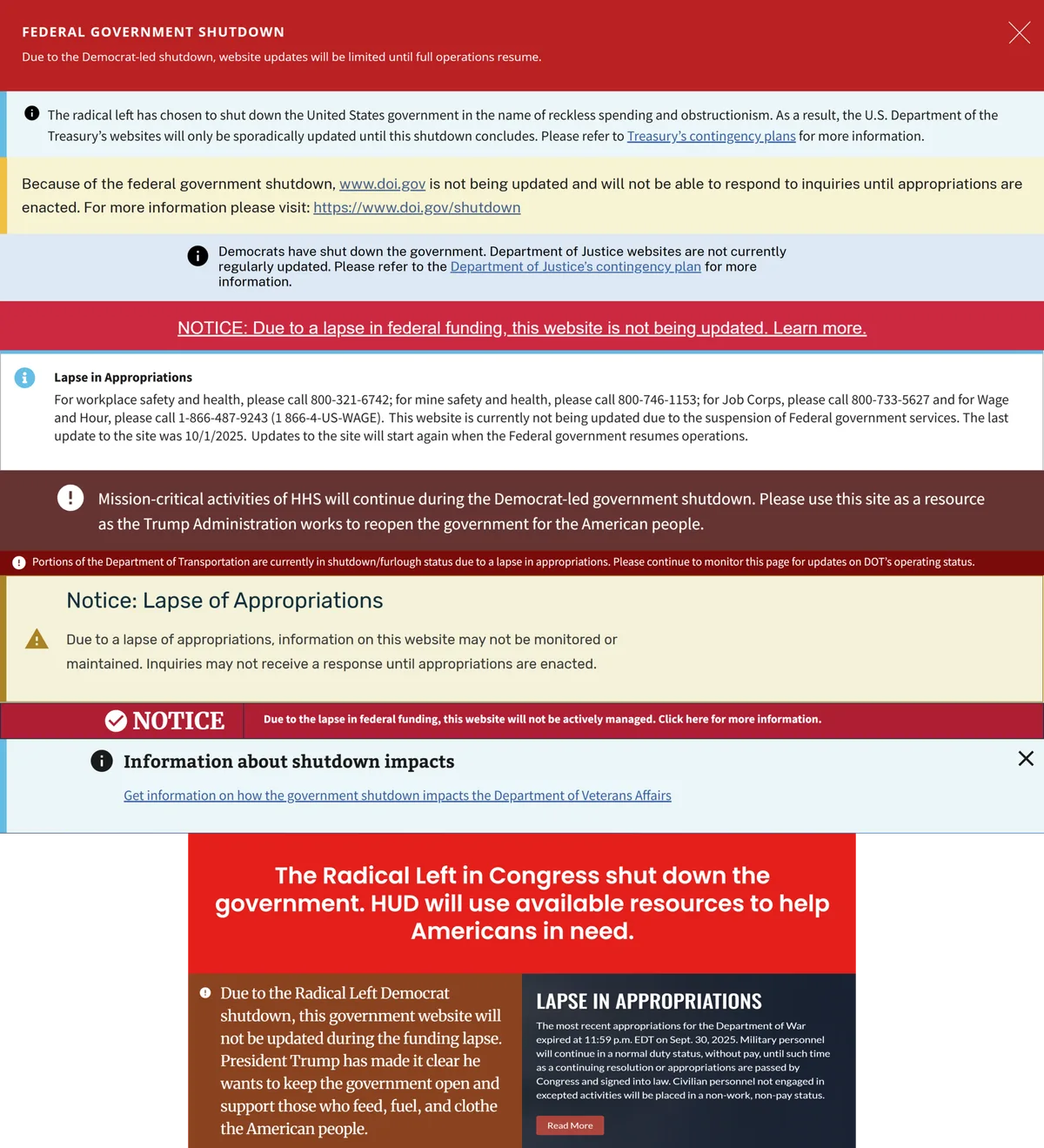
Services tied to annual appropriations stop or shrink. National parks close gates or go unstaffed. Passport and visa processing slows where fees do not cover operations. Small business loans, some farm payments, and many federal grants pause. Agency public communication goes quiet — websites go stale and statistical releases stop. Museums run by the Smithsonian close. Environmental and food inspections drop to excepted staffing. Each agency publishes a shutdown plan in advance stating what continues and what stops, and the plans are reviewed by the Office of Management and Budget.
What keeps running when funding stops?
| Continues during a shutdown | Stops or slows |
|---|---|
| Social Security, Medicare, Medicaid benefit payments | National park operations and visitor services |
| USPS mail delivery (self-funded) | Small business and many federal loan processing |
| Air traffic control, TSA screening, border security | New federal grants and contracts |
| Debt service on Treasury securities | Public statistics releases and agency communications |
| Military and law enforcement duty (unpaid until funded) | Routine facility maintenance and museum operations |
Mandatory spending — programs written into permanent law — does not need an annual vote, so benefit checks continue. The practical exception inside those programs: field office staff who administer benefits may be furloughed, which slows in-person service, new enrollments, and appeals even while checks go out.
Do federal employees get paid after a shutdown ends?
Yes. Since the Government Employee Fair Treatment Act of 2019, furloughed employees and those who worked without pay are entitled to retroactive pay at the earliest date possible after the lapse ends, and Congress has appropriated those back payments after each recent shutdown. But the law does not compensate contractors. Employees of federal contractors — janitors, IT support, food service — are typically not paid for missed days unless their employers choose to, and back pay legislation after 2019 did not cover them.
How does a shutdown differ from a debt limit impasse?
They are separate statutory collisions and get confused constantly. A shutdown is about the authority to spend; a debt limit breach is about the authority to borrow once spending is already law. Missing the debt limit deadline would affect Treasury's ability to pay all obligations — including Social Security payments and bond interest — on time. A shutdown pauses some spending; a debt limit crisis threatens payment on everything. Congress has to address both on its own schedules, and the deadlines only occasionally coincide.
What have past shutdowns actually cost?
The 2018-2019 lapse produced estimates from the Congressional Budget Office that about $11 billion in delayed federal spending and reduced activity occurred, with roughly $3 billion of that permanently lost — output that recovered after the shutdown did not count. The Office of Management and Budget and agency inspectors general have tallied other costs after earlier lapses: canceled launches, deferred maintenance that grew more expensive, tax refund backlogs, and interest paid on borrowings to cover cash timing. Smaller lapses cost less in dollars but repeat the same pattern — backlogged work orders, delayed statistical releases, and a hiring and contracting pause that agencies spend the following quarter clearing. These are mechanical costs of the funding calendar, and they fall on agencies regardless of which party controls which chamber.
Who decides which employees are excepted?
Each agency writes its own shutdown contingency plan, identifying excepted activities that protect life and property or meet other legal requirements, and OMB reviews the plans. Excepted employees — air traffic controllers, prison guards, food inspectors — must report and work without pay. Furloughed employees may not work at all, including answering email, until funding is restored. Courts have tested pieces of these arrangements over the years, and the plans are updated before each potential lapse.
What should a resident actually expect?
Expect benefit payments on schedule, slower service at anything requiring a federal office visit, closed or unstaffed parks and museums, delayed grants and loans, and a pause in new government data. Federal employees face missed paychecks followed by back pay; contractors do not. The length matters more than the event itself: short lapses cause inconvenience and backlogs, while multi-week shutdowns compound into delays that agencies spend months clearing.