The Better Government Lab has received a $2,053,870 grant from the Walmart Foundation to help states improve how they run the Supplemental Nutrition Assistance Program, or SNAP. The three-year grant, announced October 2, 2026, funds work on two goals at once: making SNAP payments more accurate and keeping access open for people who qualify. The lab is a joint research center of Georgetown University's McCourt School of Public Policy and the University of Michigan's Gerald R. Ford School of Public Policy.
The core question behind the grant is whether states can reduce payment errors without making it harder for eligible families to get food assistance. The lab's answer, in effect, is better data. "Our goal is to give States the data analysis tools and evidence they need to ensure payment accuracy without putting up unnecessary barriers for families who qualify for help," said Jeremy Barofsky, the lab's executive director and an associate research professor at the McCourt School, in the announcement.
This article explains what the Better Government Lab is, what the grant will actually fund, and why the accuracy-versus-access tension in SNAP administration matters. For more on how federal benefit programs change, follow our policy news coverage.
What is the Better Government Lab?
The Better Government Lab, or BGL, is a research center run jointly by two university public policy schools: Georgetown's McCourt School and the University of Michigan's Ford School. Its stated mission is to turn credible evidence into practical solutions through research done with federal, state, and local governments. In plain terms, it studies how government programs are administered and works directly with the agencies that run them.
The lab is not a government agency and does not run SNAP. It sits outside the system, which is relevant to how its findings should be read. The announcement states that the opinions and findings produced under the grant will be those of the lab alone and do not necessarily reflect the views of the Walmart Foundation.
What does SNAP administration involve, and why does accuracy matter?
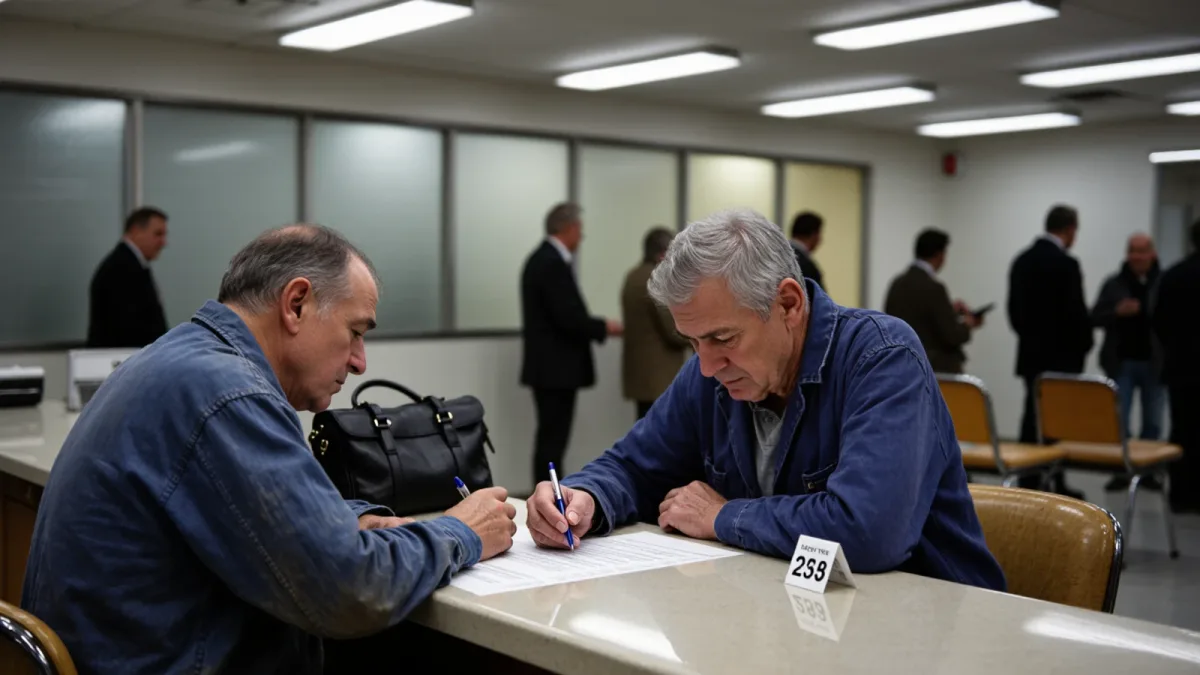
SNAP is a federal program that helps eligible households buy food, but state agencies handle much of the day-to-day administration. That includes processing applications, checking eligibility, and making sure payments are correct. "Payment accuracy" refers to whether benefits are paid in the right amount, to the right people, in the right circumstances.
Errors cut both ways. A payment can be too high, which states treat as an integrity problem, or a household that qualifies can be denied or delayed, which is an access problem. The grant is designed to address both. As Pamela Herd, the lab's co-director and a professor of social policy at the Ford School, put it: "Some states are already demonstrating that high integrity and high access can go together. This grant lets us learn from them, spread those lessons and help states reduce errors while maintaining food assistance for eligible families."
The tension is not abstract. Administrative rules that tighten verification can catch errors, but they can also add paperwork that slows or deters eligible applicants. That tradeoff is a recurring theme in benefits administration, and it is why the lab's framing — accuracy without unnecessary barriers — is the part of the announcement worth watching.
What will the grant actually fund?
The $2,053,870 grant runs for three years and supports three connected workstreams.
- Building state capacity. The lab will expand its data visualization and open source predictive modeling tools. These are tools that help states identify the cases most likely to contain payment errors, so quality-assurance staff can prioritize their reviews.
- Generating evidence on what works. The lab will build a database of state SNAP administrative policies, program access measures, and payment accuracy measures. By comparing how SNAP administration has varied over time and across states, the team will assess which state approaches produce better accuracy and access outcomes, then share that evidence.
- Convening practitioners. The lab will bring together state agency leaders, researchers, civic technology organizations, and other practitioners to identify practical approaches to simpler, more accurate, and more accessible benefits administration. An independent synthesis of those lessons will be published.
Two terms are worth defining here. "Open source" tools are software whose underlying code is publicly available, so states can use and adapt them rather than buying proprietary systems. "Predictive modeling" means using data patterns to estimate which cases are most likely to have a problem, so limited review capacity goes where it matters most. We covered a connected angle in IRS Direct File is not part of the 2026 filing season. Here is what to use instead. For related coverage, see IRS Direct File is not part of the 2026 filing season. Here is what to use instead.
Who is affected, and when?
According to the announcement, state SNAP agencies are the intended users of the lab's data analysis tools and evidence, and SNAP participants are indirect beneficiaries, since the stated aim is to reduce errors while keeping access timely for eligible people. The work is funded for three years from the October 2026 announcement, so published findings and convenings will unfold over that period.
Administrative accuracy work of the kind the lab is funding operates alongside other changes in SNAP rules and administration. For related coverage, see SNAP work requirements widened in November. The spring adaptation is still uneven. We covered a connected angle in SNAP work requirements widened in November. The spring adaptation is still uneven.
What is not known yet
The announcement describes the plan, not the results. It does not name the states that will participate, specify which measures the accuracy database will prioritize, or set a publication schedule for the synthesis of lessons. Those details will matter for judging whether the work changes how states actually administer SNAP. Readers interested in how government programs are delivered and examined can also browse our programs and accountability sections.
For individual questions about SNAP eligibility or benefits, the official channel is your state SNAP agency. SocialGov is an independent publication, not a government agency or portal, and cannot process applications or issue eligibility determinations.