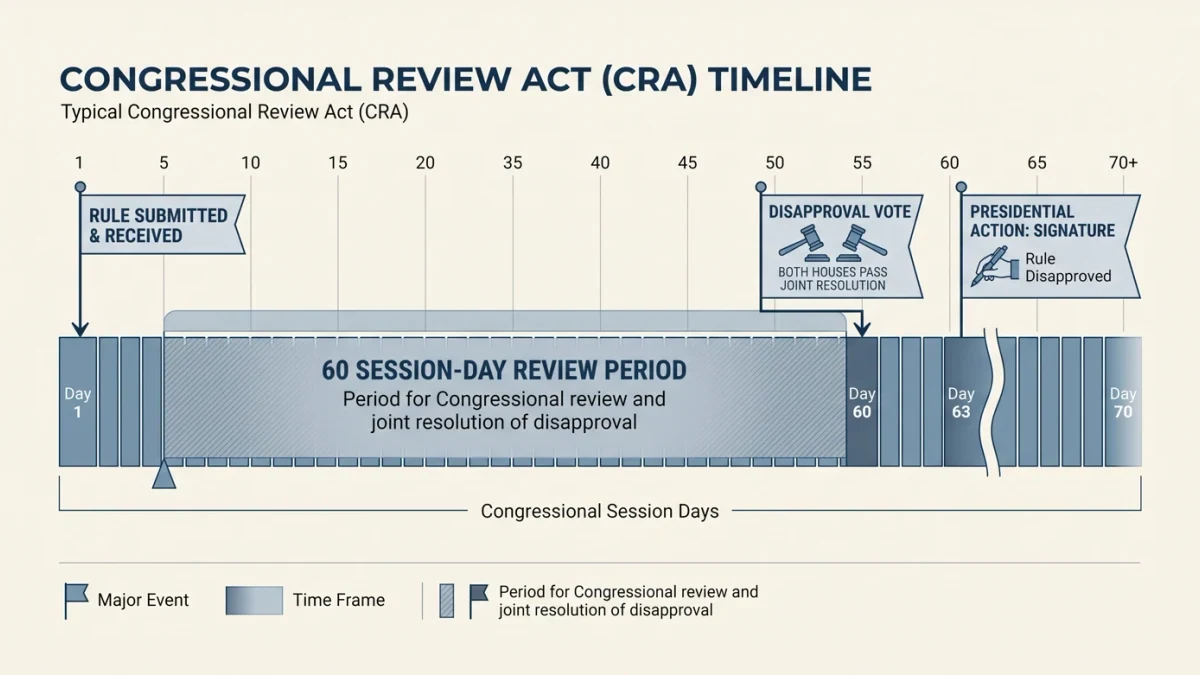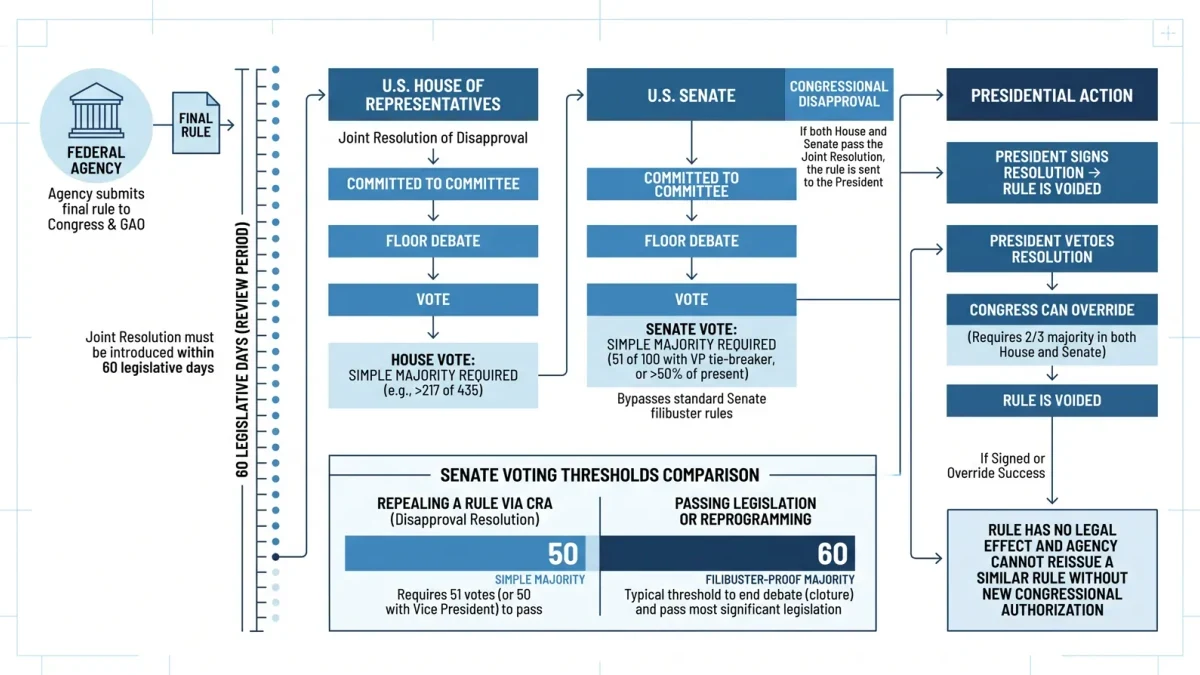
In a decision dated December 2025 (B-337604), the Government Accountability Office found that NTIA's BEAD Restructuring Policy Notice of June 6, 2025 was a "rule" under the Congressional Review Act and should have been submitted to Congress and GAO before taking effect, per GAO's published decision. The finding does not by itself unwind the restructuring, but it means NTIA has had to cure the submission problem, and it hands legal ammunition to anyone challenging the program's rewritten rules. States are already deep into the reworked selection process.
What changed?
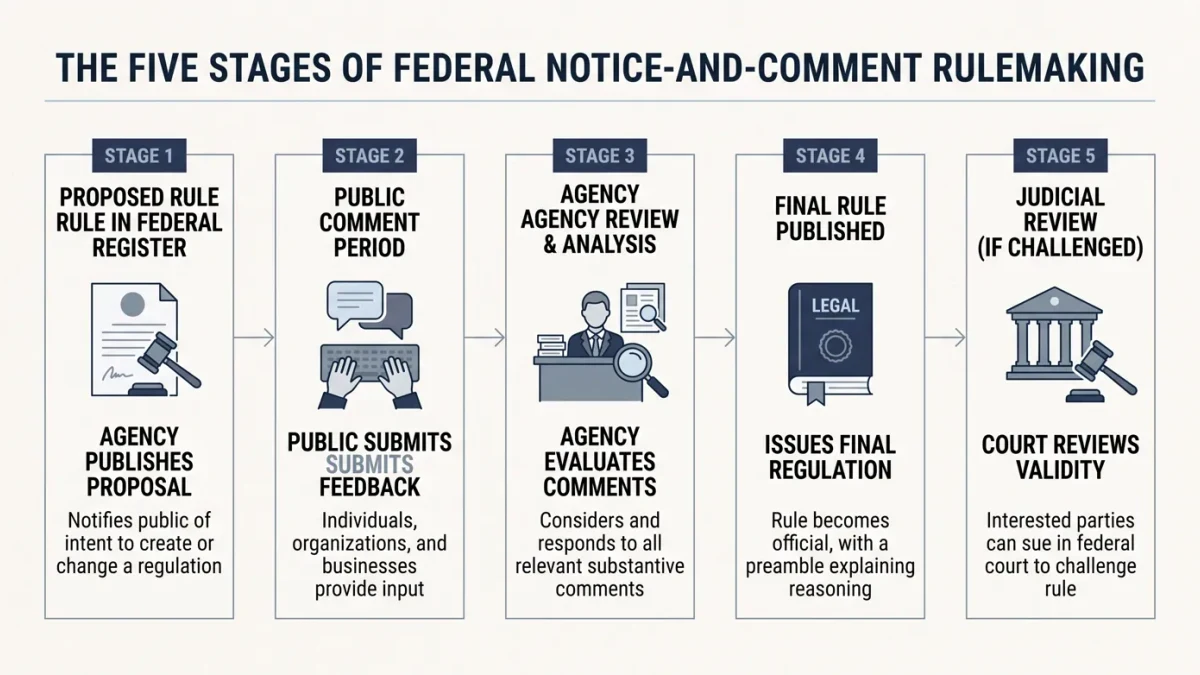
The June 6, 2025 policy notice rebuilt the subgrantee-selection rules for the Broadband Equity, Access, and Deployment program. It replaced the prior fiber-first approach with technology neutrality, opened the door to low-earth-orbit satellite and fixed wireless, required a new "Benefit of the Bargain" round of bidding designed to drive down subsidy requests, and told states to rescind their preliminary awards and re-run selection. NTIA approved the revised initial proposals of all 56 states and territories in July 2025, per the agency's announcement, clearing every state to begin the new round, with revised final proposals due about 90 days later.
What did the GAO find?
Under the Congressional Review Act, agencies must transmit covered rules to Congress and GAO before they can take effect. GAO concluded the policy notice met that definition, and NTIA had not transmitted it. Analysts following the program, including law-firm commentaries, report that NTIA was expected to submit the notice in early 2026 to bring itself into compliance. Because the notice predates the decision by months and states have relied on it, most observers do not expect the ruling to reverse the reworked awards, but it creates a procedural vulnerability for litigation.
Who is affected?
States, which spent 2025 re-running selection processes under rules now flagged as procedurally defective; internet providers, some of which lost preliminary awards in the re-bid; and the unserved and underserved locations the program was built to connect. Early results show the restructure driving down per-location costs sharply: in Louisiana, provisional awards in the Benefit of the Bargain round totaled roughly $499 million of the state's $1.36 billion allocation, a fraction of earlier plans, per the state's ConnectLA program.
What it means for you
If you live in an area BEAD was meant to reach, construction timelines have slipped by about a year as states re-ran their competitions, and the mix of providers building in your area may now include satellite and fixed-wireless operators that the original rules would have excluded. Your state broadband office's website lists its current awards and timeline. Because the program's legal footing is in flux, treat any announced award as provisional until your state's final proposal is approved by NTIA.
What happens next?
NTIA reviews revised final proposals as states submit them, and construction is expected to begin in 2026 in the earliest states. Watch for the agency's CRA submission to Congress and for any legal challenges that invoke the GAO decision. Congress, which holds CRA review rights over the notice, could also weigh in on the program's direction.