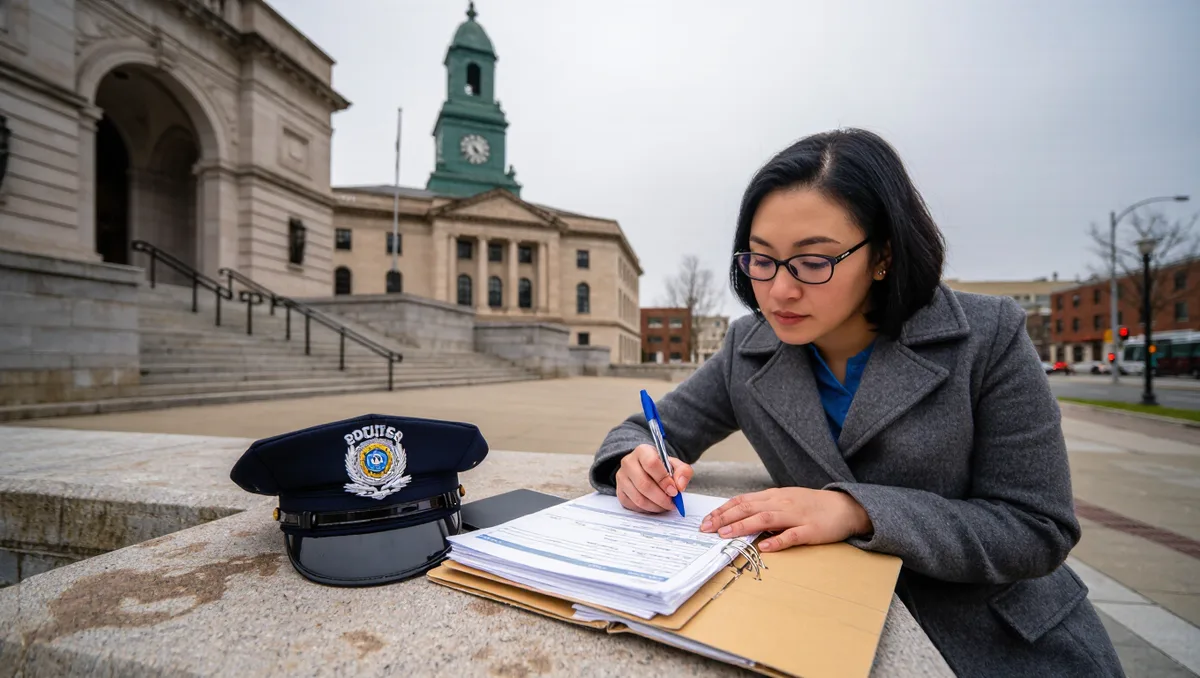
New York published the pay of every local government employee outside New York City in the Empire Center's What They Make 2026 report, released October 21, 2026. The data covers fiscal year 2025-26 and comes from payroll records filed with the state pension system. In Central New York, all ten of the region's highest-paid local positions were Syracuse police jobs, topped by John Tassini at $282,861.
The report is worth reading with a method, not just a headline. The figures are gross pensionable earnings, not take-home pay, and they exclude fringe benefits such as health insurance and employer pension contributions. This guide walks through what the numbers cover, what the 2026 findings show across four regions, and the checks a careful reader should run before drawing conclusions. For more coverage of this kind, see our government news section. This connects to our earlier piece, Local government news: why it matters more than you think.
Where the pay data comes from
The underlying records are payroll submissions to the New York State and Local Retirement System (NYSLRS), the state pension fund. Employers file the earnings that count toward an employee's pension. The Empire Center, an independent, non-partisan, non-profit think tank based in Albany, compiles those submissions into its annual report covering all 1,517 counties, cities, towns and villages outside New York City.
Statewide, the 179,222 local employees were paid a total of $12.0 billion in fiscal year 2025-26, an average of $67,037. That average is the baseline every regional figure should be read against.
One data-quality note matters before anything else. In both the Central New York and Mohawk Valley releases, the Empire Center excluded an employee reported at exactly $350,000, far above the prior year's pay for records matching the same name and hire date. NYSLRS referred questions about the figures to the employers. The report treats those entries as possible reporting errors rather than pay.
What the 2026 numbers show in Central New York
Central New York's 13,158 local employees averaged $56,842, fifth among the state's nine regions outside New York City. Local governments in Cayuga, Cortland, Madison, Onondaga and Oswego counties paid a total of $748 million. About 12.5 percent of their employees earned $100,000 or more, compared with roughly one in five statewide, and four employees were paid more than Governor Hochul's $250,000 salary.
The Central New York findings are dominated by one employer. Syracuse's police chief, Mark Rusin, who took the job in January 2026, was paid $253,352. The city's 1,845 employees averaged $73,641, while its 748 police and fire employees averaged $110,490. At the town level, Camillus police and fire employees averaged $117,975, the highest in the region.
Per-resident spending tells a different story from per-employee averages. Local payrolls cost $953 per resident in Central New York, below the statewide $1,054. Cortland County spent the most per resident among the region's counties, at $1,113, and the City of Oswego's payroll came to $1,330 per resident, the second-highest of any city in the state.
How other regions compare
The regional releases show how differently the top of the pay scale is built around the state. In the Mid-Hudson, Town of Ramapo police officers held four of the five highest-paid positions, led by Daniel Hyman at $421,338, the second-highest local government pay in the state. The region's 36,128 employees averaged $80,584, second only to Long Island, and local payrolls cost $1,214 per resident, the highest of any region.
The Southern Tier looks almost the opposite. Its highest-paid employee was Mary Nobilski, a Steuben County worker, at $309,582, and the top ten was mainly county officials rather than police. Only one police officer, Ithaca's Theodore Schwartz at $200,053, made the region's top ten. The region's 13,274 employees averaged $50,093.
The Mohawk Valley had the lowest averages: $49,987 overall, with general employees at $46,180, the lowest of any region. Only eight employees topped $200,000, and four of the region's five highest-paid positions were county elected officials. Local payrolls cost $892 per resident, the lowest of any region, though sparsely populated Hamilton County spent $3,025 per resident, the highest of any county.
How to read the numbers without tripping over them
A few checks separate a fair reading from a bad one.
- Read the classification. Police and fire employees show as a separate category; county correction officers and deputy sheriffs are classified as general employees in the NYSLRS data, which is why Oneida County's correction officers appear among its general-employee figures.
- Watch the reporting caps. In the Mid-Hudson table, seven employees are listed at exactly $350,000, the federal pension earnings limit, and eight more at exactly $250,000, the Tier 6 limit. The report notes their actual pay was likely higher, so the published figure can understate the top of the scale.
- Remember what is missing. The amounts exclude health insurance and employer pension contributions, so total compensation costs are higher than the listed pay.
- Compare like with like. A per-employee average says little without the per-resident figure next to it, and a small town's average can swing on a handful of staff.
The strongest counter-argument to alarm at the top figures is the distribution: statewide, about one in five local employees earned $100,000 or more, and in the Southern Tier and Mohawk Valley it was 8.0 and 8.9 percent respectively. The averages, not just the maximums, carry the story.
Where to check pay yourself
The Empire Center publishes searchable payroll records for every county, city, town, village and special district at its SeeThroughNY.net transparency site, and the full statewide What They Make 2026 report covers all 1,517 local governments outside New York City. Readers who want context on why local pay records matter can start with our piece on why local government news matters, and readers tracking public spending oversight will find related material under accountability. Readers following this should also see SBA cuts upfront loan fees for small manufacturers in fiscal 2026 while other borrowers pay new rates.
Socialgov is an independent publication, not a government agency or portal. It does not process records requests or answer payroll questions; those go to the employer or NYSLRS. The figures here are as of fiscal year 2025-26 and will change with next year's filings.