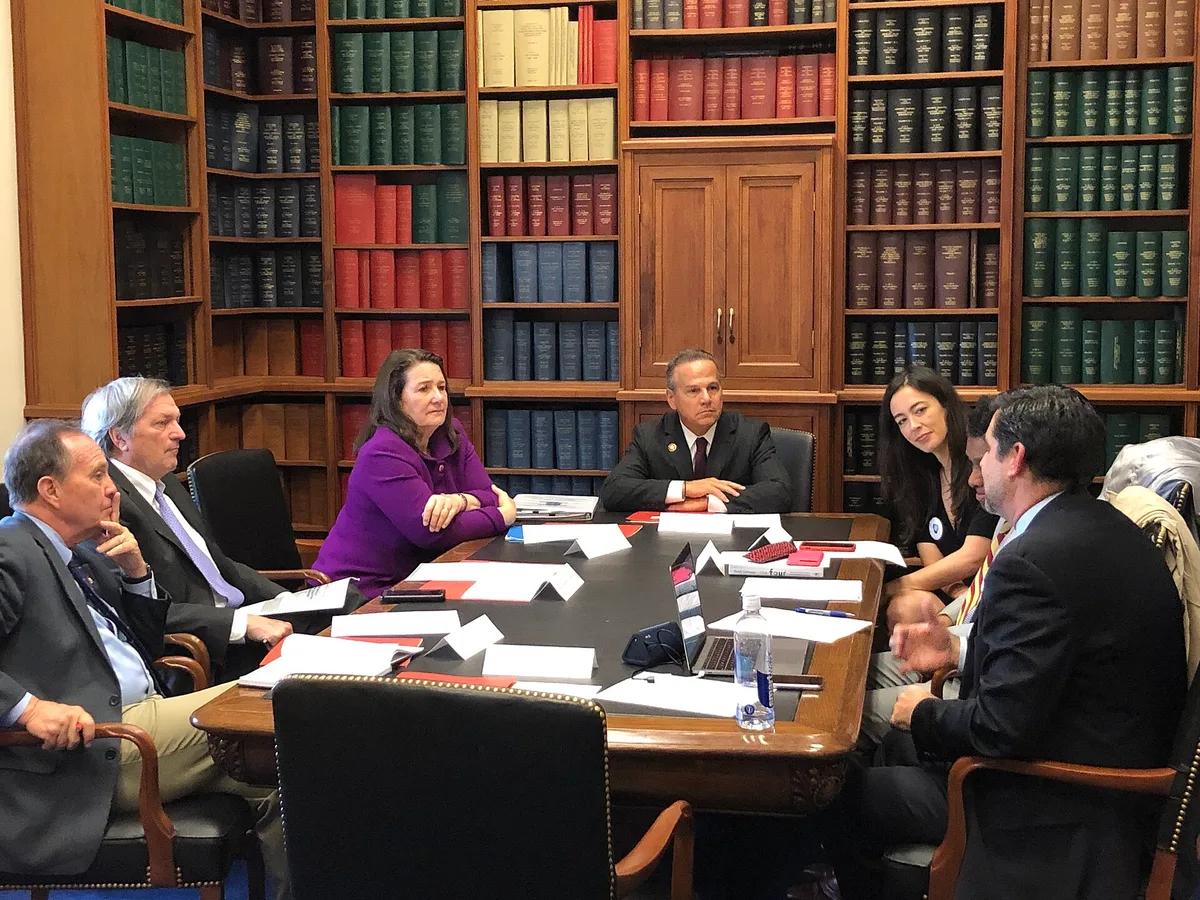
Local government news matters more than national headlines because the decisions that shape your day are made close to home. Crossing guards, housing rules, utility rates, police staffing and park fees are set by councils, boards and county agencies, not by Congress. The news that tracks those decisions is the only running public record of how they were made and who made them.
The pattern is easy to see in one place. Coverage of Reston, Virginia, in recent years has touched on a data center expansion residents say floods their homes with light and noise, a county debate over crossing guards at high schools, appointments to the Reston Community Center board, and the retirement of the chief executive of the authority that runs two major airports. None of these stories began in Washington. All of them changed something in daily life.
What counts as local government news?
Local government news is reporting on the bodies that govern where you live: town and city councils, county boards, school boards, planning and zoning commissions, water and transit authorities, and the boards that run libraries, community centers and special districts. It also covers the officials who lead them and the budgets, ordinances and contracts they approve. We covered a connected angle in How government contract performance metrics are measured and enforced.
The scope is wider than most people assume. When Reston Patch reported that Jack Potter planned to retire as chief executive of the Washington Airports Authority after 15 years, with billions of dollars in improvements underway at Dulles and Reagan National, that was local government news. The authority is a public body. Its leadership and capital plans affect every traveler through those airports.
So are quieter items. The same outlet covered a public vote that seated two incumbents and one newcomer on the board overseeing the Reston Community Center's programs, facilities and finances. A board most residents cannot name sets fees, schedules and spending for a facility they may use weekly.
How local decisions reach your daily life
The clearest way to understand the stakes is to follow a single story from decision to doorstep. In October 2026, NBC4 Washington reported that residents of a Reston neighborhood said a data center expansion near their backyards caused noise and light pollution, with one report describing light blasting through blackout curtains and vibration cracking homes, and noting the company's expansion had been an issue for 10 years.
Siting a data center is a local land-use decision. County boards approve the zoning, the permits and often the tax arrangements. Once approved, residents live with the result. The public record of those approvals, and the coverage that explains them, is how residents learn what was decided, when, and by whom, before or after the construction starts.
The same chain runs through smaller matters. After a 16-year-old student was struck by a vehicle while walking to a Fairfax County high school, NBC4 reported the crash renewed a debate over county budget cuts that had removed crossing guards from high schools. A budget line item, invisible to most residents when it passed, became a safety question the community could weigh only because reporting connected the two.
Even benefit news lands locally. Reston Patch reported that officials said older adults and people with disabilities in Virginia would see a monthly increase in Social Security payments beginning in 2027. The program is federal. The reporting translated a national cost-of-living adjustment into a concrete figure for local readers, which is the practical function of local coverage.
Why the local record is hard to replace
Most local government business happens in meetings few residents attend. Agendas are published, minutes are kept, and votes are recorded, but the raw documents do not explain themselves. Reporting is the layer that turns a 200-page agenda packet into a story a resident can read in five minutes.
That layer also creates accountability. When Fairfax County Police deployed a new Drone as First Responder program and used it to catch a suspect accused of peeping into homes, NBC4's reporting showed a new policing technology in action, with video, at the moment it entered public use. Residents learned the capability existed and could judge it. Without that record, a program can expand with little notice.
The record matters most when something goes wrong. Coverage of the Reston condo community where residents said they faced a summer with no air conditioning and no clear short-term solution, reported by FOX 5 DC, put a housing problem on the public agenda. Building maintenance, condo governance and county code enforcement intersect in cases like that. Public attention is often what moves them.
What this means for you
Our analysis of how local coverage actually functions points to three practical uses for any resident.
- Know the bodies that govern you. List them: your council or county board, your school board, your planning commission, and any special districts that bill you. Most post agendas online. Reading a monthly agenda is the fastest way to see what is coming.
- Watch budgets and land-use votes. These two items drive most local outcomes. A budget sets staffing for schools, police and crossing guards. A zoning vote sets what gets built next to your home. Both are decided in public meetings that local coverage previews and explains.
- Use the record, not rumor. When a local issue affects you, ask for the vote tally, the meeting date and the document. Local reporting usually supplies all three, which is what separates a verified account from a neighborhood message board thread.
There is a second-order effect worth naming. Local news capacity has narrowed in many places, which means fewer reporters sit in council chambers. Where coverage thins, the public record still exists, but fewer people read it. Residents who follow even one local outlet, or one agenda feed, hold a practical advantage in knowing what is about to change on their street.
How to follow local government news well
Treat local coverage as a starting point, not the whole record. A good routine has three steps.
- Find the primary source. Every story about a vote or a budget should point to a meeting, a docket or an agency page. Go there for the exact language and the exact dates.
- Note the decision-maker. Local stories name boards and agencies. Learn which body handles which subject in your jurisdiction, because the answer varies by state and even by county.
- Track the follow-through. The data center story in Reston ran for years. The crossing-guard debate returned after each incident. Local issues rarely resolve in one meeting, and the follow-up coverage is where accountability lives.
For readers who want the wider context of how government information moves before it reaches a local story, see How government news reaches you: the pipeline explained. And when a local decision involves a contractor or a delivery program, the tools for judging it are the same ones used higher up; How government contract performance metrics are measured and enforced explains them.
Socialgov is an independent publication, not a government agency or portal. It does not process applications or issue determinations. For an official answer on any local rule described here, contact the relevant county or municipal agency directly.
The bottom line on local government news
National news tells you what the federal government is doing. Local government news tells you what is happening on your block, from the board that runs your community center to the zoning vote that puts a data center behind your fence. The evidence from one Virginia community shows the full range: airport leadership, benefit increases, policing technology, school safety budgets and land-use disputes, all decided and recorded locally. Following that record is the simplest way a resident can see decisions coming, and the only way to hold the people who made them to account.