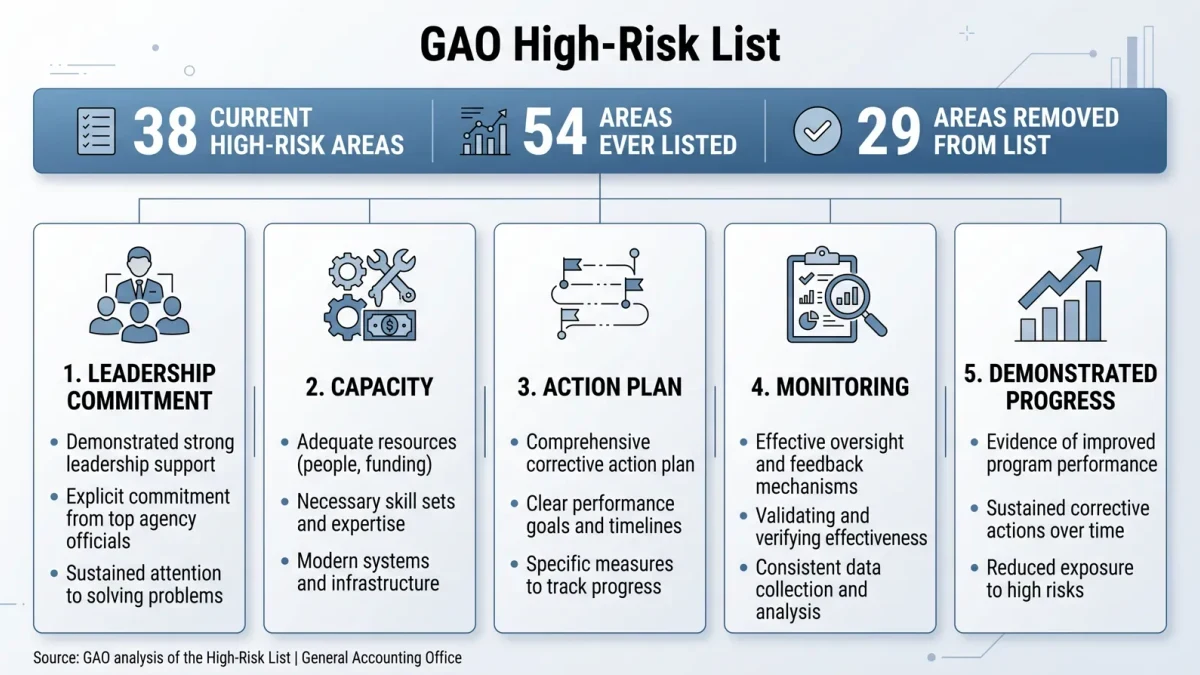
The Government Accountability Office's most recent High-Risk List, released in February 2025, names 38 areas of the federal government that are vulnerable to waste, fraud, abuse, or mismanagement, or that need broad transformation. The list, updated every two years in GAO's High-Risk Series report (GAO-25-107743), is the closest thing Washington has to a running inventory of its own weak points.
What did the report find?
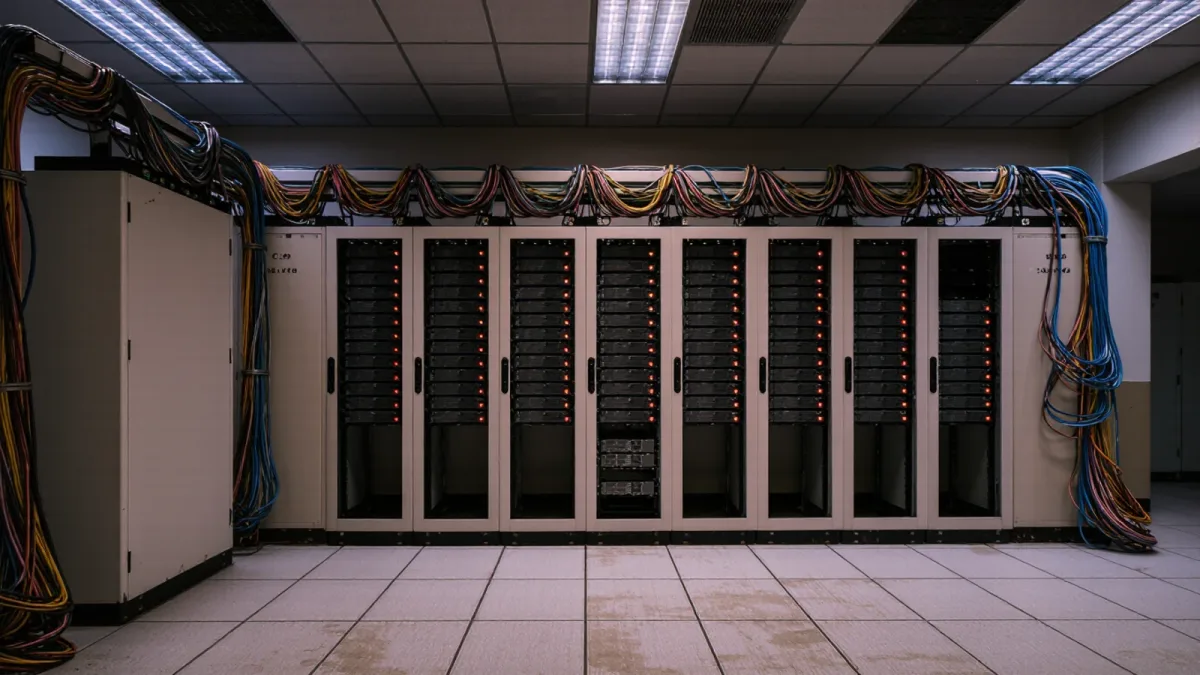
The 38 areas span nearly every major function of government. Recurring entries include cybersecurity, federal information technology acquisition and management, human capital gaps across agencies, defense weapon system acquisitions, and environmental cleanup. GAO estimates that the programs on the list account for roughly 80 percent of the government-wide improper payment total — the money federal agencies report paying out in error each year.
The list is not a scandal sheet. Programs get on it when the stakes are high, the vulnerability is documented, and the agency's own capacity to fix the problem is in question. Getting off it requires meeting five criteria, including demonstrated leadership commitment and a proven ability to produce results. Most programs take years to exit.
Why does the list exist?
Congress created the high-risk concept in 1990, and GAO has updated the list ever since. The office credits it with nearly $759 billion in cumulative financial benefits — an average of about $40 billion a year — as agencies responded to findings by tightening controls, upgrading systems, or reorganizing. Those savings are estimates of avoided losses and improved returns, not cash recovered.
What happens next?
GAO updates the list biennially and issues status reports in between, moving programs from "high risk" to "removed" as agencies hit the criteria. Agencies whose programs remain on the list face continued congressional attention, and GAO makes recommendations that committees use to shape oversight hearings and legislation. The next full update is expected with a future budget cycle.
What it means for you
If you receive federal benefits, file taxes, or rely on government services, the list is a preview of where service failures and payment errors are most likely. A program on the list often means slower processing, older systems, or weaker fraud screening behind the scenes. It is also one of the few oversight documents written for a general audience: each entry explains what is wrong, what the agency is doing, and what still needs to change.
How the list is put together
GAO assembles the list from its own audit work across the government, weighing the dollar exposure of a program, the risk to people who depend on its services, and whether the agency has shown it can fix the problem. Each entry carries its own summary, recommendations, and status, so readers can see what has changed since the last update rather than starting from scratch.