FEMA Individual Assistance provides direct money to households hit by a presidentially declared major disaster, covering temporary housing, essential home repairs, and other serious disaster-related needs that insurance does not pay for. The program is voluntary aid, not automatic compensation: you must register, and grants average a few thousand dollars per approved household, with the largest share going to temporary housing and repair. Registration happens at disasterassistance.gov, through the FEMA app, or by phone at 1-800-621-3362, and it opens only after the president declares a major disaster in your state and FEMA designates your county for individual aid. Flood damage is the key exception: standard homeowner and renter policies exclude floods, so FEMA encourages separate flood insurance.
What does Individual Assistance cover?
FEMA splits its help into two streams: Housing Assistance, tied to making a home safe and livable, and Other Needs Assistance, tied to replacing what the disaster took. The most common uses are listed below.
- Temporary housing: a rental reimbursement while your home is unlivable, or, in limited cases, a directly leased unit or manufactured home
- Home repair: money for essential repairs so the home is safe, sanitary, and functional — not restoration to its pre-disaster condition
- Home replacement, in rare cases where repair is not feasible
- Personal property replacement for essential items like clothing, furniture, appliances, and work or school tools
- Transportation: repair or replacement of a vehicle damaged by the disaster
- Medical, dental, childcare, moving and storage, and cleanup costs tied to the disaster
Two related payments run alongside: Serious Needs Assistance, an upfront sum for emergency essentials like food and water in the first weeks, and Displacement Assistance, for staying with family or in a hotel when you cannot use your home. Grant caps adjust annually; the maximum housing grant has been raised each year and has exceeded $45,000 in recent award years.
Who qualifies?
You must live in a county designated for Individual Assistance in a presidentially declared major disaster, and your losses must be disaster-caused and not covered by insurance. Homeowners, renters, and in some cases students and people staying temporarily in the area can qualify — renters are frequently eligible for personal property and temporary housing help even though they cannot claim structural repairs. FEMA does not require you to be denied a loan before receiving core housing grants anymore, but for certain other-needs items you may be offered a low-interest Small Business Administration disaster loan first, which you can decline.
How do you register?
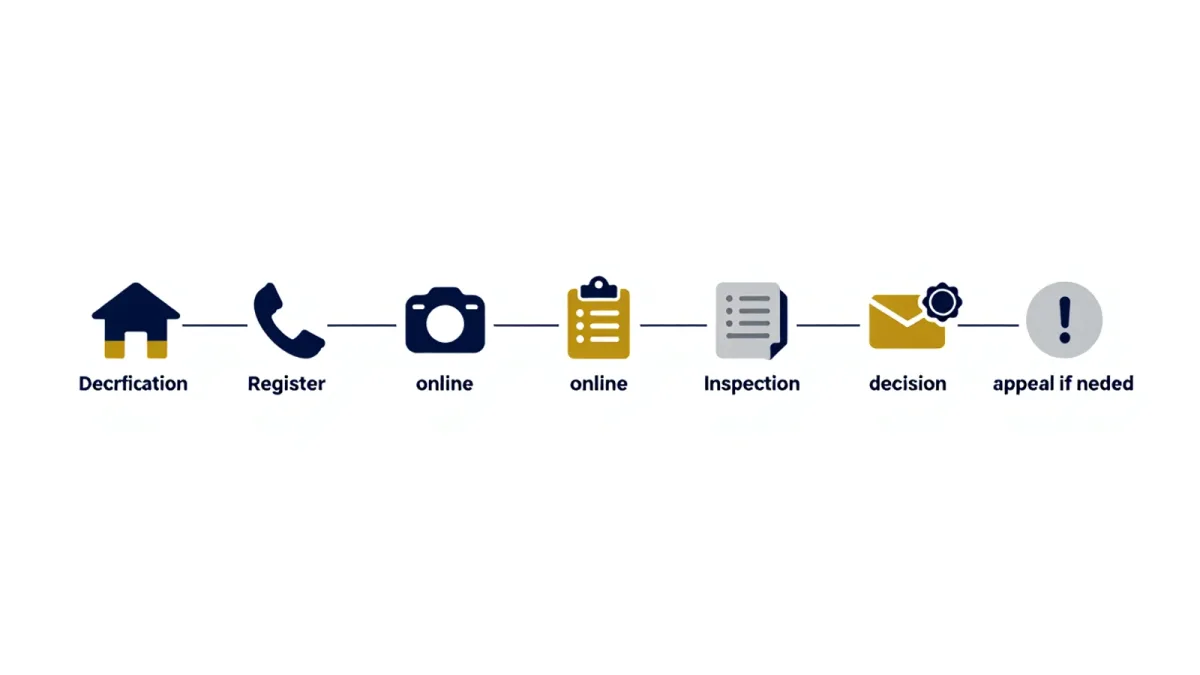
- Confirm your county is designated. Check the declared-disaster list at disasterassistance.gov; if your county appears for Individual Assistance, you can apply.
- Register promptly. Use disasterassistance.gov, the FEMA app, or the phone line. Registration windows typically stay open for months, but early registration starts the clock on all other help.
- Have key information ready. Social Security number, address of the damaged home, insurance information, current contact details, and a bank account for direct deposit.
- Document damage with photos before cleaning up. Keep receipts for hotels, rentals, and purchases related to the disaster.
- Meet the inspector. A FEMA inspector will call to schedule a free inspection of the damage. Answer the call; missed inspections stall applications.
- Track and appeal. Log into your account to see decisions. You can appeal in writing within 60 days of any determination, and many initial denials are overturned on appeal with better documentation.
Does FEMA assistance have to be repaid?
Grants under Individual Assistance do not have to be repaid in the ordinary case. Repayment becomes an issue only when FEMA determines money was received by mistake or overpayment occurred, and you can dispute that determination. This is different from an SBA disaster loan, which is real credit that must be repaid on its own terms, so read which type of help you have accepted.
How is this different from flood insurance claims?
FEMA assistance is needs-based and capped well below full repair costs; the National Flood Insurance Program pays according to a policy you bought in advance. A common pattern after major floods is that FEMA covers essential repairs while an NFIP claim or SBA loan covers the larger balance. Registering with FEMA does not conflict with an insurance claim — in fact, if you are insured, you must first file with your insurer, and FEMA helps with the uninsured gap.
What happens if you disagree with the inspector?
Your appeal is not limited to the money: you can challenge damage amounts, the finding that a home is safe to occupy, or a decision that you are not the household member eligible for help. Appeals go to writing — by mail, fax, or uploaded through your account — and must state what you believe is wrong and why. Supporting documents carry the argument: contractor estimates, photographs with dates, an insurance denial, or a letter from a doctor explaining why a reported repair was necessary. FEMA reviews the file and issues a second decision, which can be appealed again within 60 days, and beyond FEMA there is recourse to the federal courts in some cases.
What about other help after a disaster?
FEMA registration also connects you to programs beyond the grant. After a declaration, the Small Business Administration opens disaster loan centers offering low-interest loans to homeowners, renters, and businesses, the Supplemental Nutrition Assistance Program often runs disaster replacements for food lost in the event, and crisis counseling, legal aid, and unemployment assistance for people put out of work by the disaster may activate. State and voluntary agencies coordinate through the same recovery centers, so one visit can reach several programs at once.
Where to start
The official registration point is disasterassistance.gov, which also lists active declarations by state and county. SocialGov publishes information, not benefits advice, and cannot register you or influence FEMA decisions; the agency itself determines eligibility after you apply.