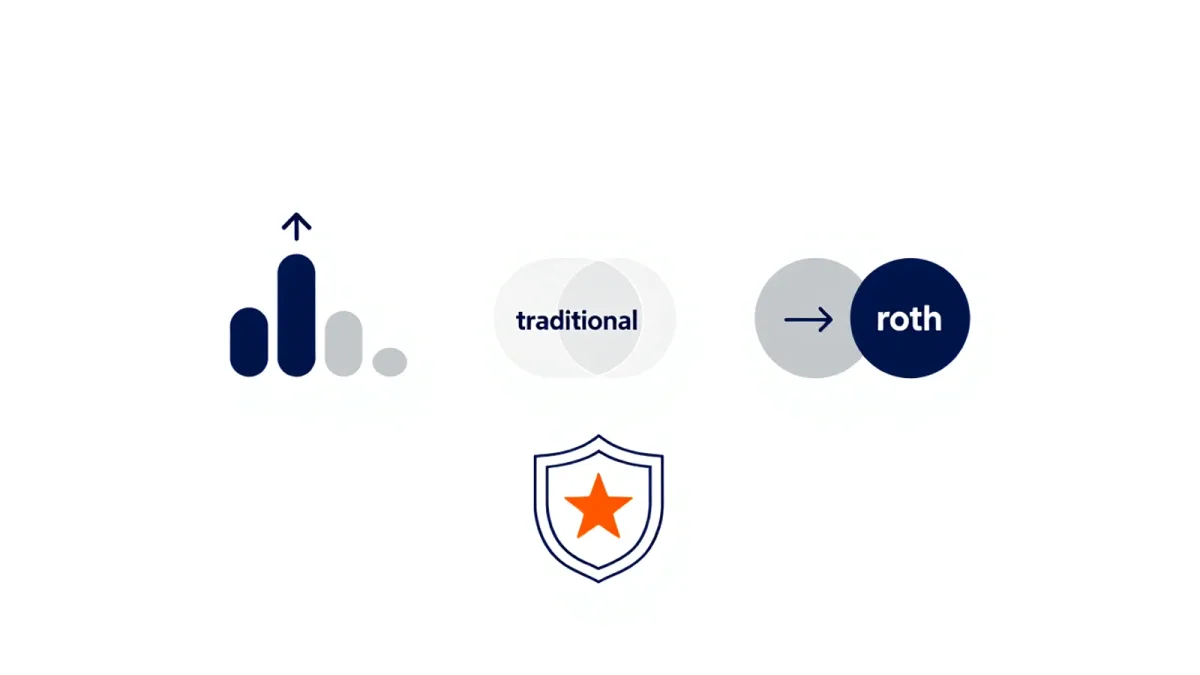
Three changes now apply to federal employees and retirees saving in the Thrift Savings Plan. As of January 2026, participants can convert traditional pre-tax TSP money to the Roth balance inside their account, the elective deferral limit rose from $23,500 to $24,500, and savers whose prior-year Social Security wages exceeded $150,000 must make their catch-up contributions as Roth, per TSP's published SECURE 2.0 materials and 2026 limit announcements.
What changed?
The in-plan Roth conversion is the structural novelty: it moves money from the traditional balance to the Roth balance within the same TSP account rather than requiring a rollover to an outside IRA. Amounts converted are taxable in the year converted, since they shift from pre-tax to after-tax status. The contribution limit increase to $24,500 follows the standard indexation of the IRS elective deferral limit, and the TSP also introduced a spillover contribution method so participants who hit the limit can keep capturing agency matching without missing pay periods.
The mandatory Roth catch-up rule comes straight from SECURE 2.0: participants whose wages from the employer exceeded $150,000 in the prior year, indexed after 2026, may no longer direct catch-up contributions to traditional balances. The same law permits employers to make matching contributions to Roth accounts; federal matching is not currently paid as Roth, so matching dollars continue to land in the traditional balance as before.
Who is affected?
All TSP participants are affected by the higher limit, in the direction of being able to save more. High earners aged 50 and over are specifically affected by the Roth-only catch-up rule, and many will owe tax on converted amounts if they use the new in-plan conversion. Retirees and spouse beneficiaries can also use the conversion feature per the TSP.
What should you do?
If you are 50 or over and earned above the threshold, check your paystub configuration so catch-up elections are made to Roth and do not stop unexpectedly. Participants maximizing contributions should use the spillover option to avoid the missed-match problem that used to occur when the limit was hit before the final pay period.
What this means for you
For most savers the changes are a modest improvement: $1,000 more of allowed deferrals and a cleaner path to capturing every matching dollar. For high earners, the difference is sharper, since catch-up saving now builds after-tax dollars in the Roth balance, which changes the math on whether contributing at all is the right move in a high-tax year. The mutual fund window, available to eligible participants for a fee, is unchanged, and the core fund lineup of the G, F, C, S, and I funds along with the L Funds continues as before.
SOCIALGOV is an independent publication and is not affiliated with the Federal Retirement Thrift Investment Board. The TSP's pages at tsp.gov are the authoritative source for contribution rules, limits, and the conversion feature.