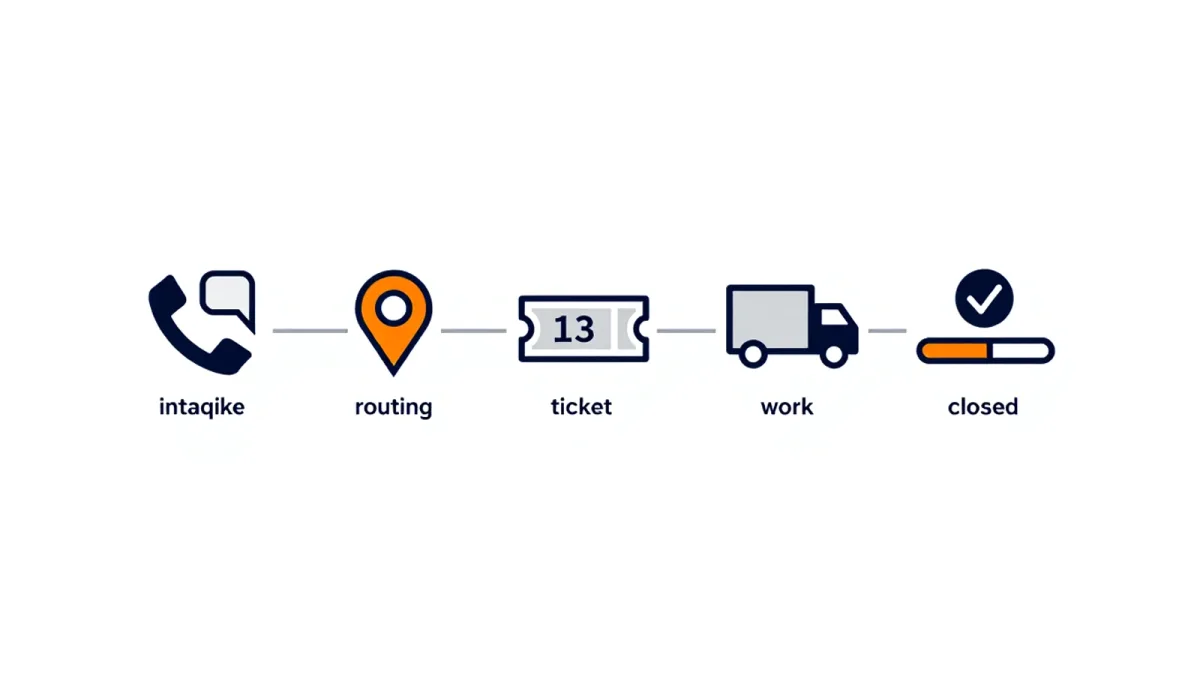
When you dial 311 or use a city's 311 app, your report becomes a service request with a tracking number, a category, and a routing rule that sends it to the agency that owns the problem. Most large cities assign that request to a crew within one business day of intake, and you can watch its status change online until it closes. As of 2026, more than 70 communities in North America operate full 311 systems, from New York City, which launched the first in 2003, to mid-size counties that run phone lines only.
What actually happens when you call or tap submit?
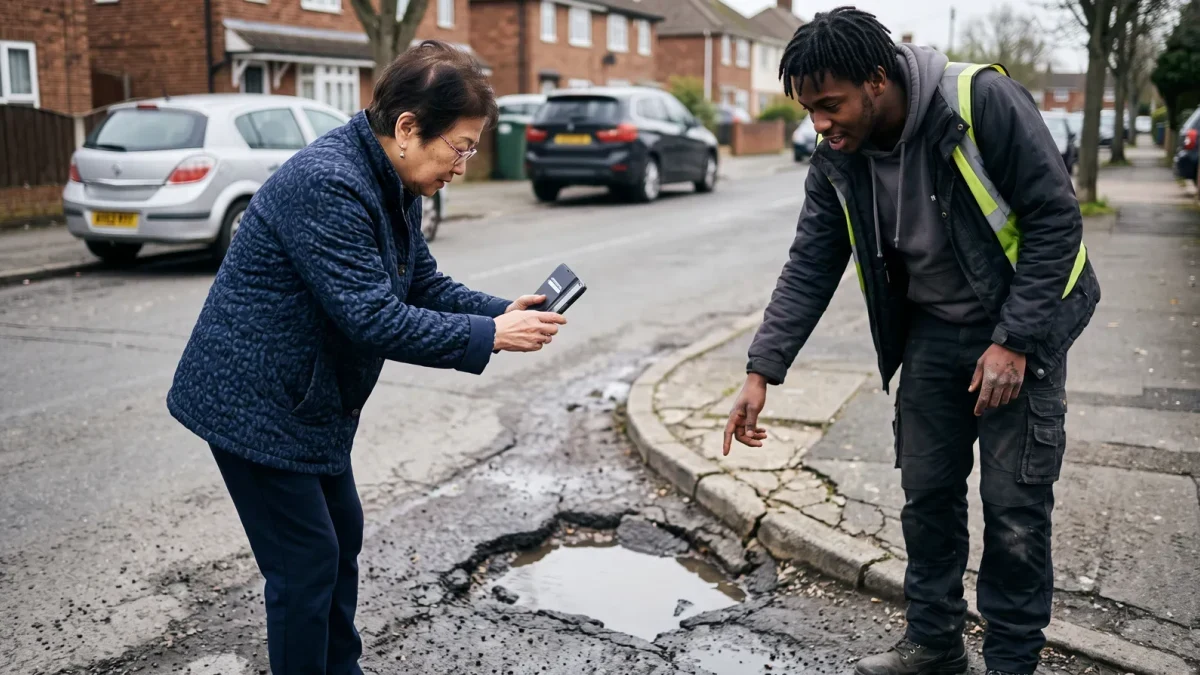
Intake is the first and most scripted step. An agent — or the app itself — walks you through a fixed decision tree: what happened, where exactly it happened, and when. Location is the critical field; most systems pin your report to a map coordinate or an address with a unit number. The agent then picks a service-request type from the city's official list. This matters more than it sounds, because the type, not your description, drives routing. A "blocked catch basin" and a "flooding street" may look identical on the pavement but go to two different divisions. Once you hang up, the system generates a tracking number and, in most cities, emails or texts it to you.
How does the request get routed to the right crew?
Routing is usually rules-based, not human. Behind the intake screen sits a configuration table — sometimes built into a commercial 311 platform, sometimes custom-built by the city — that maps each service-request type to a department, a division, and a service-level agreement, or SLA. The SLA is the city's public promise for how fast the work happens: pothole repair in three days, dead animal pickup in one, abandoned vehicle in ten. Some requests are also filtered by a triage step. Duplicate detection is a common one; if five neighbors report the same downed branch, the system links them to one work order so a crew visits once. A handful of cities now use machine-learning models to sort photo submissions, but the core routing in most systems remains the same lookup table it was twenty years ago.
What does the work crew see, and what do you see?
The routing step converts your service request into a work order in the receiving agency's field-system, such as a maintenance-management system for streets or sanitation. The crew gets a location, photos, notes, and a priority score. Crews typically close the work order from a mobile device, sometimes with a photo of the finished work. What comes back to you depends on the city. Most systems show a public status timeline — open, in process, closed — through a web lookup or app. Some cities close the loop further: they send you the closing note or photo, and a few send a short survey asking whether the problem was actually fixed.
Where does all that 311 data go?
Every closed request is a row in a municipal database, and in many cities the data is public. Dozens of cities publish near-real-time 311 request data as open data — New York, Chicago, Los Angeles, and Washington, D.C. among them — so anyone can see request volumes, response times, and geography. Researchers use these feeds to study where services lag, and city analysts use them to move crews toward demand. The data also has limits worth knowing: it measures reports, not conditions. A wealthy neighborhood with residents who file constantly can look worse served than a neighborhood with the same problems and fewer callers, a bias researchers have documented repeatedly.
What if the city says the request is closed but nothing happened?
You can reopen it, and you should. Call 311 again or use the app with your original tracking number, and ask for the request to be reopened rather than filed anew — reopens keep the history together and count against the agency's performance numbers. If the pattern persists, most cities publish 311 performance dashboards and council oversight reports; citing your tracking number in a complaint to your council member's office is the step that tends to move a stuck request.
Does 311 work everywhere?
No — 311 is a local choice, not a federal program, and there is no national 311 network. Counties and cities adopt it independently; some run a full call center and app, others just a phone line, and many smaller towns have nothing at all. If your town has no 311, the public works or city manager's office website usually lists a direct number that feeds the same work-order systems. In emergencies, always use 911; 311 is for non-emergency municipal services, and agents are trained to transfer anything involving danger to life or property.
How did 311 start, and where is it headed?
Baltimore created the first 311 hotline in 1996 as a way to keep non-emergency police calls off the 911 lines. The idea spread as a customer-service channel, and New York City's 2003 launch turned it into the full service-request platform most cities now copy. The current wave is channel consolidation: cities folding their separate department hotlines, web forms, and mobile apps into a single 311 intake so every request gets the same tracking number and data trail. Standards work is moving the same direction — the Open311 standard, an open specification for submitting and querying service requests, lets apps and neighborhood groups file reports directly into city systems instead of faxing screenshots to a help desk.