Most people say "veterans affairs" and picture one big agency in Washington. In practice, veterans benefits reach you through a layered system: a federal department that writes the rules and pays the claims, state veterans agencies that help you apply for free, and county and local offices that connect you to services near home. Knowing which layer handles what is the difference between a smooth claim and a frustrating one.
The federal side is the Department of Veterans Affairs. Its Veterans Benefits Administration says its programs help veterans and their families "buy homes, earn degrees, start careers, stay healthy, and more," covering everything from disability compensation to home loans and education benefits. The agency's own Veterans Benefits Administration page is the starting point for those programs, and it lists a main support line and a separate line for GI Bill questions.
This article explains how that system works from the first application to the offices you may deal with along the way. One caution up front: rules and dollar amounts change, and some benefits vary by state, so always confirm details with an official source before you act.
What benefits does the VA actually run?
The Veterans Benefits Administration groups its work into a few large programs. Disability compensation pays monthly benefits to veterans with service-connected conditions. Education benefits, including the GI Bill and the Post-9/11 GI Bill, help with degrees and training. Home loan programs help veterans buy homes, and the agency has also promoted newer supports such as a partial claim program for veterans who have missed mortgage payments, along with disaster assistance for VA loan holders whose homes were hit by natural disasters.
That same federal page also flags practical, less glamorous tasks. Most GI Bill students are required to verify their enrollment each month. The agency publishes compensation rate tables, a benefits A-to-Z index, and a resource navigator. It also warns veterans, especially those 60 and older, that they are targets of several scams and offers fraud-prevention guidance.
Health care sits in a separate VA administration with its own clinics and eligibility rules. This article focuses on the benefits side, but the two often connect: a disability rating from the benefits administration can matter for health care priority and other programs.
Who qualifies, and what does the application require?
Eligibility starts with military service and the character of that discharge. The Veterans Benefits Administration lists "character of discharge" among its most-visited topics, because the nature of separation from service shapes which benefits a veteran can receive. Beyond that baseline, each program has its own criteria, so a veteran may qualify for one benefit and not another.
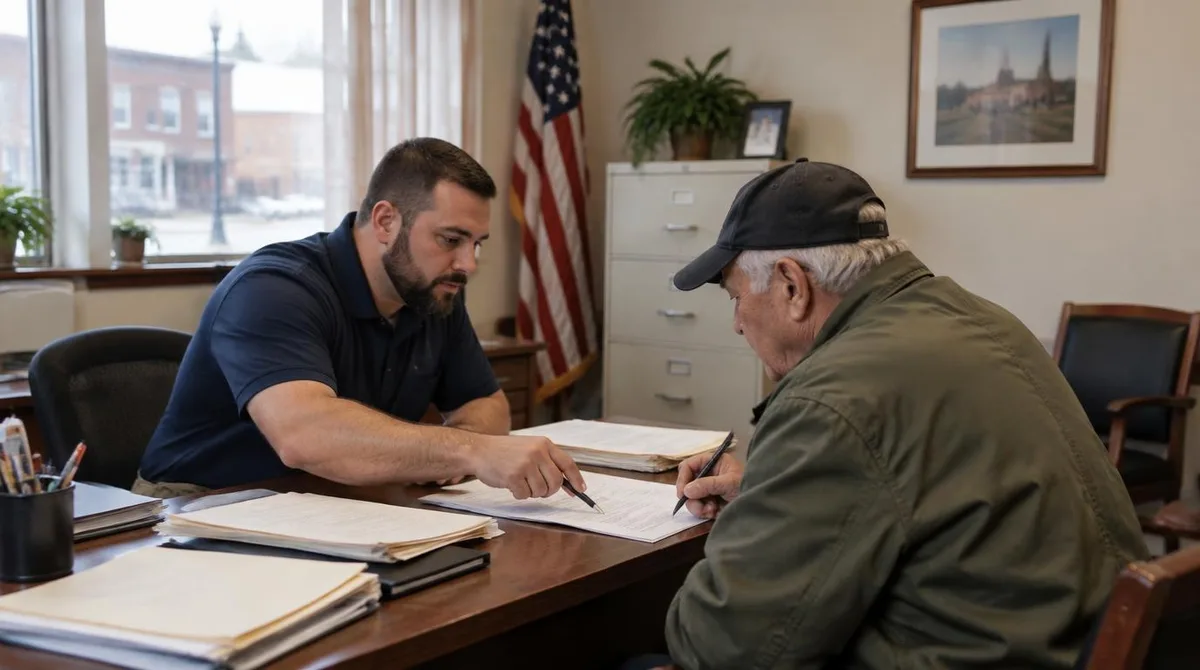
Applying is free, and you do not have to do it alone. The VA's Office of General Counsel keeps a list of VA-recognized organizations and VA-accredited individuals who are authorized to help prepare and present claims. That accreditation matters: as Maryland's Department of Veterans and Military Families puts it, veterans should be cautious of unaccredited organizations that charge fees for claims assistance.
Documents matter too. Proof of service, medical evidence for disability claims, and enrollment verification for education benefits are the kinds of materials the process turns on. The exact requirements differ by claim type, which is why the agency's program pages, not a summary, should be your checklist.
How does the claims process actually work?
A claim moves through a few predictable stages, though timelines vary with the type of claim and the evidence involved.
- You file the claim, online, by mail, or with help from an accredited representative.
- VA reviews the claim and may request evidence, such as service records or medical exams.
- VA decides the claim and sends a decision letter explaining the outcome.
- If you disagree, you can pursue the agency's appeal and review options rather than starting over.
Two practical notes come straight from official guidance. If you already receive benefits and only need to change your direct deposit information, the VA requires completion of an SF1199-A form, and Maryland's veterans agency recommends speaking to a Veterans Service Organization representative before submitting an online request. And if a claim stalls or a decision seems wrong, an accredited representative can help you navigate the next step for free.
What do state and county veterans offices do?
Here is the layer most people miss. States run their own veterans agencies, and their core service is often representation. Maryland's Department of Veterans and Military Families, for example, runs a Service Program that provides free assistance from VA-accredited benefits specialists to veterans, dependents, and survivors. Those specialists help with federal, state, and other veteran-serving agencies, and the department lists 16 veteran benefits offices across the state where anyone residing in Maryland, including Guard members, reservists, and family members, can get that help.
Counties add a third layer. Montgomery County, Maryland, established a Commission on Veterans Affairs by county legislation in 2008 to advise its executive and council on programs and services for veterans. The county also funds ServingTogether, a contractor that connects service members, veterans, and families to a network of providers, with care coordinators offering guidance on education, health care, housing, and employment across Maryland, Washington, D.C., and Northern Virginia.
What this means for you: the federal VA decides and pays the claim, but a state or county office near you can often get that claim filed correctly the first time, at no cost. Start local for help; go federal for the decision. We covered a connected angle in Affairs of state: what the phrase means and how government business becomes public record.
How should you choose where to start?
Our analysis of how these layers fit together suggests a simple rule: match the office to the task.
- For filing a claim or checking a benefit's rules, use the VA's own program pages or an accredited representative.
- For free, in-person help preparing a claim, look up your state veterans agency's benefits offices.
- For local services such as housing, employment, or community resources, ask your county or city veterans affairs office.
- For anything involving money or personal information, verify you are dealing with an accredited organization before sharing documents.
One caution worth repeating: the VA itself warns that older veterans are frequent scam targets, and unaccredited fee-charging claim helpers are a known risk. Accreditation is checkable through the VA's Office of General Counsel list.
SocialGov is an independent publication, not a government agency or official portal. We cannot process applications or issue determinations. For answers about your own case, use the VA's support channels or a VA-accredited representative, and for the machinery behind programs like these, see our affairs coverage and our guide to public affairs vs. government affairs: the real differences.
Where can you get official answers?
Official answers come from official channels, and the system gives you several. The Veterans Benefits Administration's site is the hub for federal benefit programs, with a main support line and a dedicated GI Bill line. State veterans departments, like Maryland's, offer free accredited help applying and navigating claims. County offices and commissions, like Montgomery County's, point residents to nearby clinics, coordinators, and directories. Rules change, and some benefits vary by state, so treat any figure or deadline you read anywhere, including here, as something to confirm against the current official source.